Long-Term Outcomes After Stoma Creation in Crohn's Disease: A Retrospective Cohort Study of 422 Patients.
Stoma creation and whether it can later be closed greatly affects daily life and planning for people with Crohn's disease.
Fistulas, strictures, obstruction, anemia, cancer risk, extraintestinal symptoms, and related complications.
Page 15 of 20 · 921 articles
Stoma creation and whether it can later be closed greatly affects daily life and planning for people with Crohn's disease.
Metabolic syndrome appears common in this Tunisian IBD cohort (about one-third). MetS can affect overall health and may influence long-term outcomes for people with IBD, so awareness and cardiometabolic screening may be...
The study suggests a cellular redox pathway (selenium vs thiol axis) that is altered differently in Crohn's disease versus colorectal cancer, which could point to disease vulnerabilities and possible links to treatment...
Perianal inflammatory lesions are common in Crohn's disease and may mark higher cancer-related risk; knowing their association with worse survival after anorectal cancer surgery can inform discussions about prognosis and...
A simple blood ratio measured before surgery (LCR) may help predict which children with UC are at higher risk of surgical site infection after IPAA, potentially guiding preoperative care.
Findings are relevant because they describe outcomes and predictors of conversion for a minimally invasive surgery option (SILS) that some patients with Crohn's disease may be offered. Understanding risk factors can help...
Elevated pancreatic enzymes are relatively common in IBD and can reflect very different conditions (benign asymptomatic elevations, pancreatitis variants, or autoimmune pancreatitis). Recognizing phenotype-specific...
Researchers are investigating RBM47 because it influences RNA processing and immune pathways that could modify inflammation and disease processes relevant to IBD. If borne out, RBM47 could become a biomarker or...
Sarcopenia is common in Crohn's disease and is linked to worse outcomes; a simple GNRI-based prediction tool could help identify at-risk patients without routine CT scanning.
Identifying genetic predictors of thiopurine-induced leukopenia could help prevent a serious drug side effect by improving pre-treatment genetic screening and dose decisions for people with IBD.
Perianal fistulas are a serious complication of Crohn’s disease with limited high-quality trial evidence. This randomized trial suggests ustekinumab may increase the chance of combined clinical and MRI remission at 12...

This meta-analysis suggests people with IBD face higher risks of major cardiovascular events (heart attack, ischemic heart disease, ischemic stroke), which may matter for monitoring and preventive care. Higher risk...
This review summarizes many observational studies to identify dietary and environmental factors that may influence the risk of developing ulcerative colitis, which could help guide future research and prevention efforts...
Based on the title and source metadata, this appears to be a case report related to Ulcerative colitis, Colorectal cancer, and Procedures and surgery. The original article is from Gastroenterology report.
Fournier’s gangrene is a life-threatening infection that can occur in people with active intestinal inflammation or after perineal trauma; the case shows how rapidly it can progress and how many surgeries may be needed,...
Based on the title and source metadata, this appears to be a patient education related to Inflammatory bowel disease and Medications. The original article is from hmpgloballearningnetwork.com.
A pooled analysis found modest differences in cardiac structure and function in people with IBD versus controls, which may relate to the higher cardiovascular risk seen in this population.
The case suggests that blocking IL-4/IL-13 (with dupilumab) might rarely trigger Th17-predominant colonic inflammation presenting as ulcerative colitis; patients and clinicians should be alert for new GI symptoms after...
An ELANE mutation causing severe congenital neutropenia can present with neutropenic enterocolitis that mimics ulcerative colitis. Recognizing neutropenia and pursuing genetic testing can prevent misdiagnosis and change...
This real-world, multicenter study suggests risankizumab can induce clinical and steroid-free remission and mucosal healing in many patients with Crohn disease who previously failed advanced therapies, which may be...
Rheumatological EIMs (notably joint inflammation) are frequent in IBD and affect quality of life; inconsistent definitions and lack of validated PROs make it harder for patients and clinicians to understand and compare...
Perianal fistulizing Crohn's disease is a disabling complication; a subcutaneous form of infliximab could lower treatment burden and expand options if its effectiveness and safety in this specific setting are confirmed.
If organoid transplantation can be translated to people, it could offer a new way to repair inflamed colonic lining and promote mucosal healing when current therapies are insufficient. The approach also highlights links...
A rare but serious colitis linked to ocrelizumab is described and managed successfully with ciclosporin in a steroid‑refractory case; this may be relevant to clinicians caring for patients on B‑cell–depleting therapy.
Guidelines recommend treating objective inflammation even when symptoms are mild because untreated disease can cause complications; the article describes escalation to risankizumab due to endoscopic inflammation, high...
Real-world data show how mirikizumab performs outside clinical trials, especially in patients previously exposed to multiple advanced therapies. That can help patients and clinicians weigh expectations for effectiveness...
Methotrexate is commonly used in IBD, often with biologics, but real‑world data on how long patients stay on it, typical dosing, and safety in large contemporary cohorts are limited.
An externally validated, simple prediction score could help identify patients unlikely to need early aggressive treatment and inform shared decision-making about monitoring and therapy.
Kidney and urinary problems (acute or chronic kidney injury and kidney stones) occurred in a notable minority of IBD patients in this study and were linked to prior IBD surgery, extensive UC, and cardiometabolic...
Active IBD was linked to higher risk of RSV infection and more severe respiratory outcomes in this large observational study. That could be relevant for prevention and monitoring during periods of active disease.
Identifies a redox-sensitive NOX1–ROS–IκBζ pathway that may sustain intestinal inflammation in IBD and points to a new molecular target for future therapies.
LCH can present like perianal Crohn's disease and may be missed if biopsies and molecular testing are not performed. Correct diagnosis changes treatment and prompts systemic staging for other malignancies.
Based on the title and source metadata, this appears to be a clinical study related to Inflammatory bowel disease and Complications. The original article is from Journal of Investigative Dermatology.
The study will prospectively evaluate how often dysplasia occurs, how lesions look and behave after endoscopic resection, and what factors predict local or distant recurrence—information that could change surveillance...
If you or someone you care for has β‑thalassemia major, this report shows that inflammatory bowel diseases (Crohn’s disease and ulcerative colitis) can co-occur and may present diagnostic and management challenges.
For people with moderate–severe Crohn’s disease who failed anti‑TNF drugs, this trial suggests risankizumab may achieve higher corticosteroid‑free clinical and endoscopic remission than ustekinumab, which could mean...
Based on the title and source metadata, this appears to be a case report related to Crohn's disease, Perforation, and Complications. The original article is from Digestive diseases and sciences.
The review examines whether removing the appendix could change the course of ulcerative colitis — a potential surgical option that might lower colectomy or hospitalization risk in some scenarios but also carries...
Patients with Crohn's disease had a higher adjusted risk of periprosthetic joint infection within 90 days after elective joint replacement, while ulcerative colitis did not. This difference could affect preoperative risk...
CMUSE can closely mimic Crohn's disease and may require surgery for diagnosis and symptom relief. Recognizing it can change diagnostic pathways and multidisciplinary management for people with recurrent small-bowel...
The study suggests nanoplastic particles can alter intestinal barrier function, goblet cells, mucin secretion, and inflammation-related gene expression in models with genetic susceptibility to Crohn’s disease.
Patients facing total proctocolectomy may care because the surgical approach can affect the chance of needing to convert to open surgery, how long the operation takes, and the short-term risk of complications like...
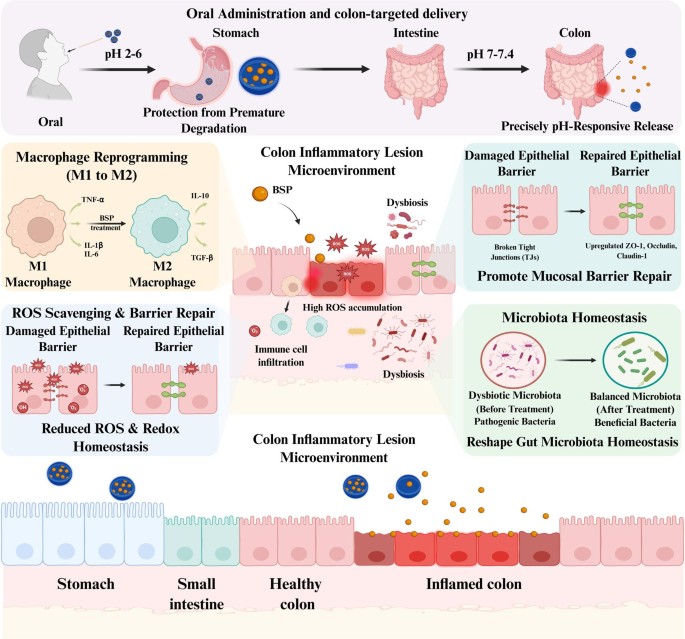
The study describes a new oral, colon‑targeted delivery system that improved outcomes in a mouse model of ulcerative colitis and shifted immune and microbiome markers—research that could inform future therapies focused...
Pyoderma gangrenosum is an uncommon but important extraintestinal skin complication that can occur with ulcerative colitis and may be mistaken for infection. Recognizing it matters because treatment and wound care differ...
Granulomas are a classic histologic feature of Crohn’s disease, so patients and clinicians may wonder whether their presence predicts worse disease or different treatment needs. This review shows existing studies are...
This study highlights factors—tumor location, age, smoking, and having IBD—that were associated with survival and progression in a Lebanese CRC cohort.
The study identifies a gut bacteria–liver signaling axis (Lactobacillus johnsonii → hepatic LXRα–SCD1) that may explain how altered hepatic lipids contribute to UC and related liver injury, and shows pristimerin can...
Extraintestinal manifestations are common in IBD and — according to this study — linked to significantly worse quality of life across social, systemic, intestinal, and emotional domains. Recognizing and treating EIMs may...