All topics

Diet and lifestyle

Nutrition, food, supplements, exercise, sleep, stress, and lifestyle research for Crohn's disease and IBD.

Page 9 of 24 · 1124 articles

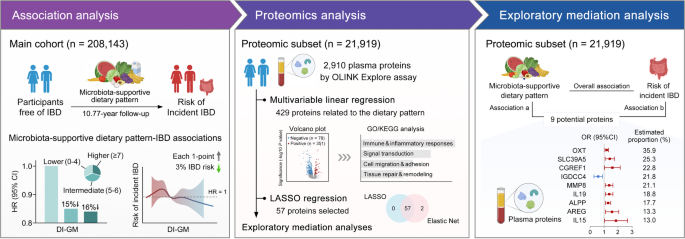
Composite Dietary Antioxidant Index and Reduced Risk of Inflammatory Bowel Disease: Evidence of Protective Association for Crohn's Disease Mediated by Biomarkers
Europe PMC

Composite Dietary Antioxidant Index and Reduced Risk of Inflammatory Bowel Disease: Evidence of Protective Association for Crohn's Disease Mediated by Biomarkers

The study suggests higher dietary antioxidant intake (measured by CDAI) may be linked to lower Crohn's disease risk and that inflammation biomarkers could partly explain the association—information potentially relevant...


Read Summary
Microbial enzyme-responsive inulin nanoparticles for colon-targeted oral delivery of 5-ASA toward improved therapy of inflammatory bowel disease.
Theranostics

Microbial enzyme-responsive inulin nanoparticles for colon-targeted oral delivery of 5-ASA toward improved therapy of inflammatory bowel disease.

The study describes a targeted oral delivery system for 5-ASA that aims to concentrate drug release in the colon and also leverage inulin’s prebiotic/immunomodulatory properties—potentially improving effectiveness and...

Read Summary
Bridging the gut and mind: a narrative review of depression in Crohn's disease and emerging gut-brain axis therapies.
Frontiers in neuroscience

Bridging the gut and mind: a narrative review of depression in Crohn's disease and emerging gut-brain axis therapies.

Depression is common in Crohn’s disease and appears linked to immune and microbial signals from the gut. Understanding gut–brain mechanisms could improve how mood symptoms are detected and treated in people with IBD.

Read Summary
Colon-targeted oral delivery of melatonin for regulating macrophage activity and intestinal barrier in ulcerative colitis.
Theranostics

Colon-targeted oral delivery of melatonin for regulating macrophage activity and intestinal barrier in ulcerative colitis.

Targeted oral delivery of melatonin could reduce inflammation and help repair the intestinal barrier in UC by acting on macrophages and epithelial cells. If translated to humans, this approach might offer a locally...

Read Summary
Emerging antimicrobial peptides in gastrointestinal disorders: Dual role in immunity and therapy.
World journal of gastrointestinal pharmacology and therapeutics

Emerging antimicrobial peptides in gastrointestinal disorders: Dual role in immunity and therapy.

AMPs are central to gut immune balance and are being explored as new therapies for IBD and related gut diseases. For people with Crohn’s or IBD, understanding AMPs helps explain research directions aimed at restoring...

Read Summary
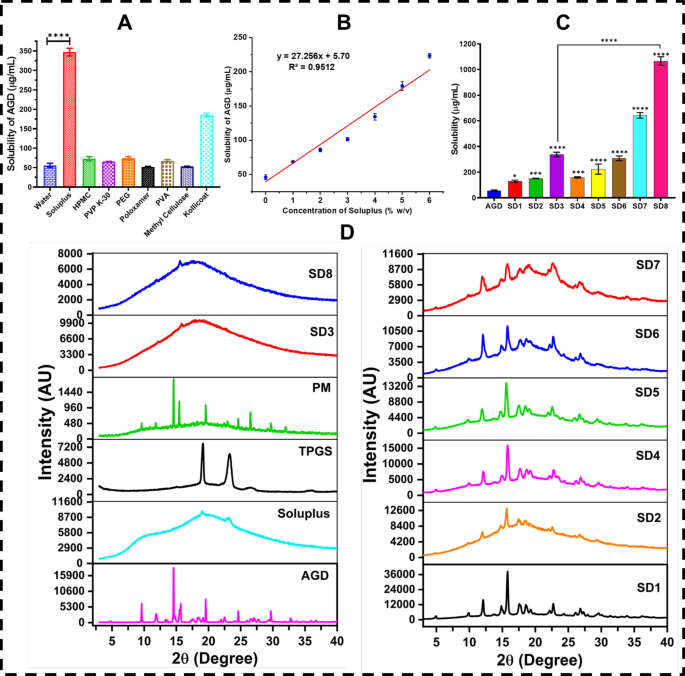
Next-Generation Solid Dispersion of Andrographolide Attenuated Inflammation and Oxidative Stress in an Activated RAW264.7 Macrophage-Based In Vitro Model Relevant to Ulcerative Colitis
AAPS PharmSciTech

Next-Generation Solid Dispersion of Andrographolide Attenuated Inflammation and Oxidative Stress in an Activated RAW264.7 Macrophage-Based In Vitro Model Relevant to Ulcerative Colitis

The study reports anti-inflammatory and antioxidant effects of a new andrographolide formulation in a macrophage model relevant to ulcerative colitis, highlighting a potential early-stage therapeutic lead that may...

Read Summary
Nutritional Status and Linear Growth at Diagnosis and Their Association with Clinical Outcomes in Paediatric Inflammatory Bowel Disease: A Multicentre Cohort Study
Nutrients

Nutritional Status and Linear Growth at Diagnosis and Their Association with Clinical Outcomes in Paediatric Inflammatory Bowel Disease: A Multicentre Cohort Study

Malnutrition and growth failure at diagnosis are common in children with IBD—especially Crohn’s—and can indicate higher inflammatory burden. Monitoring and addressing nutrition and growth is important because most...

Read Summary
The role of nutritional risk in inflammatory bowel disease: a serial mediation model through fecal calprotectin and depression leading to impaired quality of life
Frontiers in Nutrition

The role of nutritional risk in inflammatory bowel disease: a serial mediation model through fecal calprotectin and depression leading to impaired quality of life

Nutritional risk, gut inflammation (measured by fecal calprotectin), and depression were linked to worse quality of life in people with IBD. Recognizing and addressing nutrition, inflammation, and mood together could...

Read Summary
A functional immune-based platform for donor-recipient matching in faecal microbiota transplantation for inflammatory bowel disease.
EBioMedicine

A functional immune-based platform for donor-recipient matching in faecal microbiota transplantation for inflammatory bowel disease.

The paper presents a proof-of-concept immune-based assay to match donors and recipients for FMT in IBD, which could help explain variable FMT outcomes and improve donor selection if validated.

Read Summary
β-Glucan alleviates colitis by remodeling the colonic microenvironment and promoting interleukin-33-driven active eosinophil differentiation.
Molecular immunology

β-Glucan alleviates colitis by remodeling the colonic microenvironment and promoting interleukin-33-driven active eosinophil differentiation.

The study identifies a β-glucan → IL-33 → active eosinophil pathway that reduced colitis in a mouse model, suggesting a novel immunomodulatory mechanism that could inform future IBD research.

Read Summary
Intestinal Barrier Dysfunction in Ulcerative Colitis: Mechanisms and Therapeutic Perspectives
Medicine Insights

Intestinal Barrier Dysfunction in Ulcerative Colitis: Mechanisms and Therapeutic Perspectives

Intestinal barrier dysfunction is a likely driver of inflammation and flares in ulcerative colitis, so therapies that restore barrier integrity could help reduce disease activity and recurrence. This review highlights...

Read Summary
Engineering IL-10-Overexpressing MSCs via a Non-Viral PEG-PEI Nanoplatform for Potent Therapy of Inflammatory Bowel Disease.
ACS applied bio materials

Engineering IL-10-Overexpressing MSCs via a Non-Viral PEG-PEI Nanoplatform for Potent Therapy of Inflammatory Bowel Disease.

Researchers are exploring ways to improve cell therapies for IBD by making therapeutic cells produce anti-inflammatory molecules like IL-10. If scalable and safe, non-viral engineering of MSCs could lead to...

Read Summary
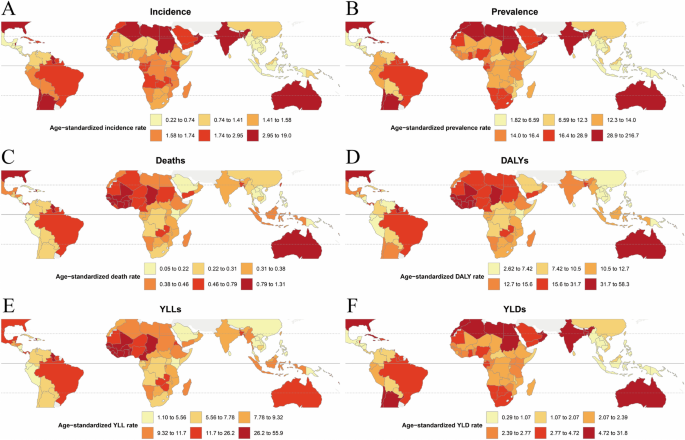
Climate classification, sociodemographic development, and the burden of inflammatory bowel disease in tropical countries
Tropical Medicine and Health

Climate classification, sociodemographic development, and the burden of inflammatory bowel disease in tropical countries

The work links climate and sociodemographic context to IBD burden in tropical regions, which can influence diagnostic recognition, resource needs, and research priorities for communities where IBD is rising.

Read Summary
Piezo mechanosensitive channels: A biological hub for intestinal barrier homeostasis and an emerging target for disease intervention
World Journal of Gastroenterology

Piezo mechanosensitive channels: A biological hub for intestinal barrier homeostasis and an emerging target for disease intervention

Piezo channels appear central to how mechanical signals influence the gut barrier, immunity, and secretion — processes that can affect inflammation and symptoms in IBD, IBS, and colon cancer. Understanding them could...

Read Summary
Oral and upper gastrointestinal Crohn's disease: new perspectives on pathogenesis and clinical management.
Frontiers in cell and developmental biology

Oral and upper gastrointestinal Crohn's disease: new perspectives on pathogenesis and clinical management.

Oral and upper-GI involvement in Crohn's can be missed and may change how disease is diagnosed and managed. A focused review helps clinicians and researchers spot gaps in diagnostics and treatment research.

Read Summary
Glucagon like peptide 1 receptor agonists in patients with inflammatory bowel disease: safety, clinical effectiveness and anti-inflammatory mechanisms.
Frontiers in gastroenterology (Lausanne, Switzerland)

Glucagon like peptide 1 receptor agonists in patients with inflammatory bowel disease: safety, clinical effectiveness and anti-inflammatory mechanisms.

Many people with IBD also have overweight or obesity; GLP-1 receptor agonists are being used for weight loss and may affect inflammation and IBD outcomes. This review summarizes current evidence on safety, effectiveness,...

Read Summary
Peroxynitrite-activated near-infrared fluorescence sensing platform for early non-invasive IBD diagnosis, herbal formula efficacy evaluation and anti-enteritis bioactive components screening.
Talanta

Peroxynitrite-activated near-infrared fluorescence sensing platform for early non-invasive IBD diagnosis, herbal formula efficacy evaluation and anti-enteritis bioactive components screening.

This study reports a non-invasive fluorescence probe that detects a reactive nitrogen species (peroxynitrite) linked to intestinal inflammation and shows signal changes in cells, animal models, and mouse feces — a...

Read Summary
Lactiplantibacillus plantarum BF_15 Confers Protection Against Ulcerative Colitis by Orchestrating Gut Microbiota-Barrier-Immune Triad Homeostasis.
Food science & nutrition

Lactiplantibacillus plantarum BF_15 Confers Protection Against Ulcerative Colitis by Orchestrating Gut Microbiota-Barrier-Immune Triad Homeostasis.

Early-stage research suggests a specific probiotic strain may reduce inflammation and alter the gut microbiome and immune-related proteins in an animal model of ulcerative colitis, which could point to future therapeutic...

Read Summary
Cyanidin-3-O-glucoside ameliorates DSS-induced colitis in mice by modulating the PI3K-Akt pathway and preserving intestinal barrier function.
Food & function

Cyanidin-3-O-glucoside ameliorates DSS-induced colitis in mice by modulating the PI3K-Akt pathway and preserving intestinal barrier function.

A naturally occurring pigment (C3G) improved inflammation and barrier markers in a mouse colitis model, which could be of interest to people exploring nutrition-related ways to support gut health.

Read Summary
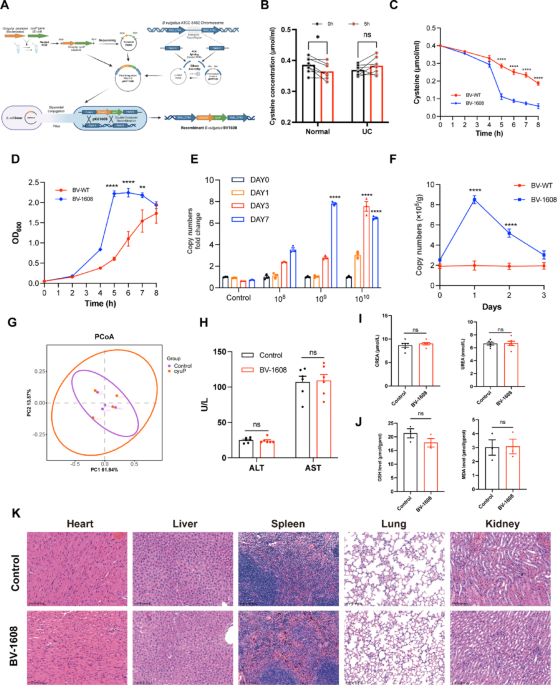
Depleting luminal cysteine with engineered bacteroides vulgatus alleviates experimental colitis by suppressing Th17 differentiation through an ATF6-dependent mechanism
Inflammation Research

Depleting luminal cysteine with engineered bacteroides vulgatus alleviates experimental colitis by suppressing Th17 differentiation through an ATF6-dependent mechanism

This study describes a new microbiome-engineering approach that reduced inflammation in mouse colitis models by sequestering cysteine and altering T cell behavior. If followed up, it could point to novel future therapies...

Read Summary
Effects of paraprobiotic Lactobacillus acidophilus LA-5 on PANoptosis, oxidative stress and inflammation in acetic acid-induced ulcerative colitis.
Journal of the science of food and agriculture

Effects of paraprobiotic Lactobacillus acidophilus LA-5 on PANoptosis, oxidative stress and inflammation in acetic acid-induced ulcerative colitis.

This preclinical study suggests a heat‑killed form of Lactobacillus acidophilus LA‑5 reduced inflammation, oxidative stress, and markers of regulated cell death in a mouse model of ulcerative colitis — with effects...

Read Summary
FUT2-mediated intestinal fucosylation: a master regulator of host-microbiota symbiosis in health and disease.
Frontiers in microbiology

FUT2-mediated intestinal fucosylation: a master regulator of host-microbiota symbiosis in health and disease.

FUT2-dependent intestinal fucosylation helps shape which gut microbes thrive and how the mucosa resists pathogens. For people with IBD, differences in FUT2 function and altered fucosylation may contribute to microbiome...

Read Summary
Blood Bile Acids for Inflammatory Bowel Disease Diagnosis and Disease Activity Assessment: A Metabolomics Meta-Analysis.
Journal of proteome research

Blood Bile Acids for Inflammatory Bowel Disease Diagnosis and Disease Activity Assessment: A Metabolomics Meta-Analysis.

If blood bile acid patterns are reproducibly different in IBD and track with disease activity, they could become noninvasive biomarkers to help diagnose IBD or monitor flares. That would be useful for patients and...

Read Summary
“Targeted Delivery–Long-Acting Adhesion–Synergistic Treatment” Integrated Adhesive Bilayer Microgels Loaded with Costunolide for Ulcerative Colitis Therapy
ACS Applied Materials & Interfaces

“Targeted Delivery–Long-Acting Adhesion–Synergistic Treatment” Integrated Adhesive Bilayer Microgels Loaded with Costunolide for Ulcerative Colitis Therapy

This study describes a novel colon-targeted microgel delivery system carrying an anti-inflammatory natural compound that, in a mouse model, reduced colitis signs and altered gut bacteria — a potential new strategy for...

Read Summary
Gut microbiota-derived propionate mediates the protective effects of green banana resistant starch on ulcerative colitis by inhibiting HDAC1 to promote HIF-1α acetylation.
Food research international (Ottawa, Ont.)

Gut microbiota-derived propionate mediates the protective effects of green banana resistant starch on ulcerative colitis by inhibiting HDAC1 to promote HIF-1α acetylation.

The study links a common dietary fiber (green banana resistant starch) to microbiota changes and production of propionate that protect the colonic barrier and reduce inflammation in a mouse model of ulcerative colitis.

Read Summary
Chemical Profiling of Fructus Ailanthi and a Network Pharmacology-Based Mechanistic Study in Ulcerative Colitis.
Current pharmaceutical design

Chemical Profiling of Fructus Ailanthi and a Network Pharmacology-Based Mechanistic Study in Ulcerative Colitis.

This study proposes specific plant compounds and molecular pathways that could be relevant to ulcerative colitis, which may guide future lab research and drug-discovery efforts. For people with UC, it points to...

Read Summary
Mechanism of Shao Kuiling Decoction in Treating Ulcerative Colitis: A Network Pharmacology and Molecular Docking Study.
Current computer-aided drug design

Mechanism of Shao Kuiling Decoction in Treating Ulcerative Colitis: A Network Pharmacology and Molecular Docking Study.

The study suggests molecular targets and pathways through which a traditional herbal formula might influence UC biology, offering testable hypotheses for future lab and clinical research.

Read Summary
Advancement in Inflammation-responsive Drug Delivery System for Chronic Inflammation.
Anti-inflammatory & anti-allergy agents in medicinal chemistry

Advancement in Inflammation-responsive Drug Delivery System for Chronic Inflammation.

Researchers are exploring ways to deliver drugs selectively to inflamed gut tissue in IBD to boost local effectiveness and reduce systemic side effects. Progress in smart nanoparticles and hydrogels could eventually...

Read Summary
Exclusive enteral nutrition versus the Crohn's disease exclusion diet for remission induction in pediatric Crohn's disease: 52-week study.
Journal of pediatric gastroenterology and nutrition

Exclusive enteral nutrition versus the Crohn's disease exclusion diet for remission induction in pediatric Crohn's disease: 52-week study.

Both EEN and the Crohn’s disease exclusion diet are used to induce remission in children with Crohn’s disease. Evidence that they perform similarly through 52 weeks may help families and clinicians choose the approach...

Read Summary
Clinical features and biomarkers associated with ulcerative colitis: A systematic review and meta-analysis
World Journal of Gastroenterology

Clinical features and biomarkers associated with ulcerative colitis: A systematic review and meta-analysis

Knowing which symptoms and non-invasive biomarkers most strongly associate with UC can help patients and clinicians decide who should be prioritized for diagnostic endoscopy and for monitoring disease activity.

Read Summary
High-speed air circulation preserves curcumin bioactivity and enables pH-dependent intestinal release in oyster-based functional foods for IBD dietary intervention.
Food research international (Ottawa, Ont.)

High-speed air circulation preserves curcumin bioactivity and enables pH-dependent intestinal release in oyster-based functional foods for IBD dietary intervention.

IBD patients sometimes use dietary strategies and supplements like curcumin for inflammation. This study describes a food-processing method that preserves curcumin activity and targets release to the intestine in lab...

Read Summary
Quercetin glycoside-specific modulation of the gut-brain axis determines protection against colitis-associated cognitive decline.
Food research international (Ottawa, Ont.)

Quercetin glycoside-specific modulation of the gut-brain axis determines protection against colitis-associated cognitive decline.

People with IBD may experience cognitive symptoms; this preclinical study identifies specific quercetin glycosides that protected mice from colitis-related cognitive decline via gut microbiota and tryptophan metabolism...

Read Summary
Oxypalmatine alleviates ulcerative colitis through RAB8A-mediated inhibition of STAT1-driven pro-inflammatory macrophage polarization.
Phytomedicine : international journal of phytotherapy and phytopharmacology

Oxypalmatine alleviates ulcerative colitis through RAB8A-mediated inhibition of STAT1-driven pro-inflammatory macrophage polarization.

Researchers identified a plant-derived molecule (oxypalmatine) that reduced inflammation in a mouse colitis model by blocking pro-inflammatory macrophage activity through the RAB8A–STAT1 pathway. This suggests a...

Read Summary
Prunella vulgaris Polysaccharide Ameliorates DSS-Induced Ulcerative Colitis by Increasing the Abundance of Ligilactobacillus agilis to Inhibit Inflammation and Preserve Intestinal Barrier Integrity
Journal of Agricultural and Food Chemistry

Prunella vulgaris Polysaccharide Ameliorates DSS-Induced Ulcerative Colitis by Increasing the Abundance of Ligilactobacillus agilis to Inhibit Inflammation and Preserve Intestinal Barrier Integrity

A plant polysaccharide (PVP) reduced inflammation and preserved intestinal barrier proteins in a mouse model of ulcerative colitis, apparently by increasing a specific gut bacterium. This points to a microbiome-related...

Read Summary