Article Archive

Page 79 of 100 · 4788 patient-friendly summaries

Machine Learning-Based Prediction of Treatment Response to Vitamin D3 in Adolescents and Young Adults with Inflammatory Bowel Disease: A Prospective, Open-Label, Alternation-Based Comparative Study
Biomedicines

Machine Learning-Based Prediction of Treatment Response to Vitamin D3 in Adolescents and Young Adults with Inflammatory Bowel Disease: A Prospective, Open-Label, Alternation-Based Comparative Study

Vitamin D supplementation is commonly considered in people with IBD because deficiency is frequent and low vitamin D may relate to inflammation.

Read Summary
Isolated Transverse Colon Perforation During Corticosteroid Tapering in Quiescent Systemic Lupus Erythematosus: A Histopathology-Supported Diagnosis of Exclusion
Cureus

Isolated Transverse Colon Perforation During Corticosteroid Tapering in Quiescent Systemic Lupus Erythematosus: A Histopathology-Supported Diagnosis of Exclusion

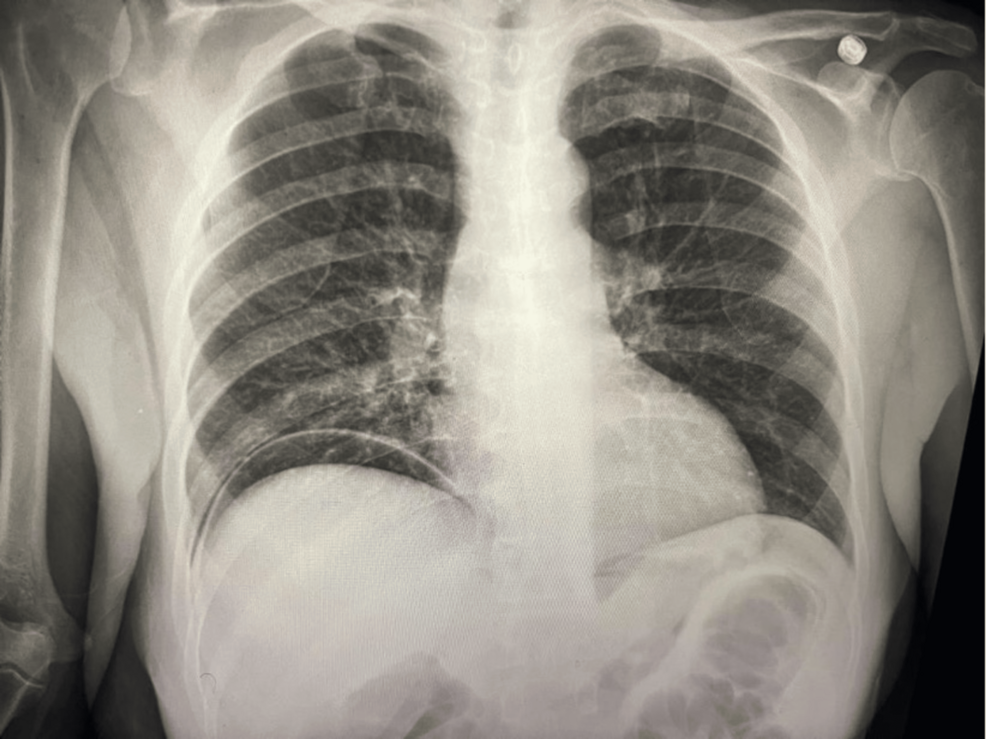
GI perforation is a serious, potentially life-threatening complication that can occur in people with autoimmune diseases; this report highlights that perforation can happen during corticosteroid tapering and that careful...

Read Summary
Mechanisms and clinical outcomes linking HLA-DRB1*01:03 and IBD
Nature Reviews Gastroenterology & Hepatology

Mechanisms and clinical outcomes linking HLA-DRB1*01:03 and IBD

The work identifies a genetic link (HLA‑DRB1*01:03) to anti‑IL‑10 autoantibodies and describes a small subgroup of IBD patients who may have a distinct immune mechanism driving disease—information that could matter for...

Read Summary
Gut microbiome in pediatric acute pancreatitis and Crohn's disease versus irritable bowel syndrome and healthy controls
Journal of Pediatric Gastroenterology and Nutrition

Gut microbiome in pediatric acute pancreatitis and Crohn's disease versus irritable bowel syndrome and healthy controls

The gut microbiome differed more in pediatric Crohn’s disease and acute pancreatitis than in IBS or healthy kids, suggesting microbial changes are stronger in organic inflammatory disease and could be targets for future...

Read Summary
Upadacitinib Reduces Rates of Hospitalization in Ulcerative Colitis: A Large-Scale Nationwide Cohort Study
Journal of Clinical Medicine

Upadacitinib Reduces Rates of Hospitalization in Ulcerative Colitis: A Large-Scale Nationwide Cohort Study

Lower hospitalization rates suggest upadacitinib may reduce severe disease events that require inpatient care, which matters to patients and clinicians aiming to avoid hospital stays and complications. Large real-world...

Read Summary
Nutrition and Body Composition: Missing Outcomes in Appetite- and Weight-Modifying Therapies for Individuals with Inflammatory Bowel Disease.
Gastroenterology

Nutrition and Body Composition: Missing Outcomes in Appetite- and Weight-Modifying Therapies for Individuals with Inflammatory Bowel Disease.

Cure8 found this source from Gastroenterology, but the page could not be read reliably yet. It is tagged for Inflammatory bowel disease and Research and clinical trials. Open the original article for the full details.

Read Summary
Black tea-processed Toona sinensis leaves alleviate DSS-induced ulcerative colitis in mice by enriching flavonoids and modulating gut microbiota
Frontiers in Nutrition

Black tea-processed Toona sinensis leaves alleviate DSS-induced ulcerative colitis in mice by enriching flavonoids and modulating gut microbiota

The study identifies a food-processing method (black tea processing) that increased flavonoids and improved outcomes in a mouse model of colitis, suggesting that specific dietary preparations might influence gut...

Read Summary
Multi-omics Mendelian randomization and experimental validation identify PRKAB1 as a regulator of phosphatidylcholine metabolism in IBD.
Naunyn-Schmiedeberg's archives of pharmacology

Multi-omics Mendelian randomization and experimental validation identify PRKAB1 as a regulator of phosphatidylcholine metabolism in IBD.

Phosphatidylcholines are implicated in IBD biology; identifying a gene that regulates PC metabolism could point to new mechanistic targets. If PRKAB1 modulates epithelial lipid metabolism relevant to inflammation, it may...

Read Summary
A scoping review on emerging biomarkers in inflammatory bowel disease: Towards precision medicine in diagnosis and therapeutic management.
PloS one

A scoping review on emerging biomarkers in inflammatory bowel disease: Towards precision medicine in diagnosis and therapeutic management.

New, non-invasive biomarkers and AI-driven multi-omic approaches could make diagnosis and treatment of IBD more precise, helping patients avoid invasive tests and improving chances of choosing effective therapies sooner.

Read Summary
Marine Collagen Peptide Fraction from Lutjanus erythropterus Scales: A Multifunctional Bioactive for Intestinal Barrier Protection and Redox Modulation in Ulcerative Colitis
Foods

Marine Collagen Peptide Fraction from Lutjanus erythropterus Scales: A Multifunctional Bioactive for Intestinal Barrier Protection and Redox Modulation in Ulcerative Colitis

This preclinical study suggests a marine-derived collagen peptide fraction may strengthen intestinal barrier function, reduce oxidative stress, and partially restore gut microbiota in models of colitis — mechanisms...

Read Summary
Risk factors and fatigue in difficult-to-treat Crohn’s disease: A cross-sectional study of a Chinese cohort
World Journal of Gastroenterology

Risk factors and fatigue in difficult-to-treat Crohn’s disease: A cross-sectional study of a Chinese cohort

Identifies features associated with the new international definition of difficult‑to‑treat Crohn’s disease and links DTT status to greater mental fatigue. Biomarker differences (IL‑5, IL‑10) may point to distinct immune...

Read Summary
Balloon-assisted endoscopic stricturotomy for small bowel fibrostenotic strictures: A comparison of Crohn’s disease-related and non-Crohn’s disease strictures
World Journal of Gastroenterology

Balloon-assisted endoscopic stricturotomy for small bowel fibrostenotic strictures: A comparison of Crohn’s disease-related and non-Crohn’s disease strictures

Patients with small-bowel strictures face repeat procedures or surgery; this study suggests endoscopic stricturotomy outcomes differ by whether the stricture is from Crohn’s disease and that a simple blood marker (NLR)...

Read Summary
Exosomes from IL-33-Stimulated Macrophages Regulate Epithelial Barrier Function to Ameliorate TNBS-Induced Colitis in Mice.
Cells

Exosomes from IL-33-Stimulated Macrophages Regulate Epithelial Barrier Function to Ameliorate TNBS-Induced Colitis in Mice.

The study identifies a potential biologic approach (macrophage-derived exosomes) that improved epithelial repair and barrier function in a mouse colitis model, which could inform future therapeutic research for IBD.

Read Summary
Editorial: Risankizumab in Refractory Crohn's Disease-From Real-World Effectiveness to Strategic Positioning and Early Monitoring.
Alimentary pharmacology & therapeutics

Editorial: Risankizumab in Refractory Crohn's Disease-From Real-World Effectiveness to Strategic Positioning and Early Monitoring.

Based on the title and source metadata, this appears to be an opinion or commentary related to Crohn's disease, Inflammatory bowel disease, and Risankizumab. The original article is from Alimentary pharmacology &...

Read Summary

Sulfasalazine- and Cerium Ion-Loaded Polymersomes with Enhanced RONS Scavenging and Colonic Mucosal Repair Ameliorate Experimental Colitis.

The work targets oxidative/nitrosative stress and mucosal repair—mechanisms important in IBD—using a novel delivery vehicle that pairs an approved anti-inflammatory drug with catalytic cerium ions. If translated, this...

Read Summary

Risk of Inflammatory Bowel Disease Following Hospital-Treated Infections and Modulatory Role of Host Genetics to Support a Multi-Hit Pathogenesis Model.

If hospital-treated infections raise later IBD risk—especially in people with certain immune-related genetic variants—this supports a multi-hit model of IBD and could eventually help identify higher-risk individuals...

Read Summary
Mechanisms of Commensal- Specific CD8+ T Cell Differentiation, Restraint and Dysregulation in Intestinal Inflammation
NIH RePORTER

Mechanisms of Commensal- Specific CD8+ T Cell Differentiation, Restraint and Dysregulation in Intestinal Inflammation

Understanding how commensal-specific CD8+ T cells are generated and become pathogenic could reveal new mechanisms contributing to IBD, pointing to future therapeutic targets. The project aims to clarify immune–microbiota...

Read Summary
INTERROGATING GCPII-MEDIATED GLUTAMATE SIGNALING IN THE GASTROINTESTINAL TRACT AND ITS ROLE IN INTESTINAL HOMEOSTASIS
NIH RePORTER

INTERROGATING GCPII-MEDIATED GLUTAMATE SIGNALING IN THE GASTROINTESTINAL TRACT AND ITS ROLE IN INTESTINAL HOMEOSTASIS

This project studies a novel enzyme target (GCPII) that is reportedly upregulated in IBD and may change glutamate signaling and barrier function; understanding it could point to new treatment strategies for people whose...

Read Summary
Modulating Microbial Choline Degradation to Prevent and Treat Intestinal Fibrosis in Inflammatory Bowel Diseases
NIH RePORTER

Modulating Microbial Choline Degradation to Prevent and Treat Intestinal Fibrosis in Inflammatory Bowel Diseases

Intestinal fibrosis and strictures remain a major cause of surgery and obstruction in Crohn’s disease, and current anti-inflammatory drugs don’t reliably prevent fibrosis. If microbial choline degradation promotes...

Read Summary
Protective effects of Brassica rapa L. water extract against DSS-induced acute UC-like colitis in mice and its regulatory mechanisms involving gut microbiota and the intestinal mucosal barrier
Frontiers in Microbiology

Protective effects of Brassica rapa L. water extract against DSS-induced acute UC-like colitis in mice and its regulatory mechanisms involving gut microbiota and the intestinal mucosal barrier

The study identifies a plant extract that reduced colitis-like injury in mice and altered gut microbes and intestinal barrier markers, which could inform future preclinical work. For people with IBD, this is early-stage...

Read Summary
Cimicifuga foetida L. polysaccharide alleviates ulcerative colitis by inhibiting pyroptosis and regulating gut microbiota
Frontiers in Pharmacology

Cimicifuga foetida L. polysaccharide alleviates ulcerative colitis by inhibiting pyroptosis and regulating gut microbiota

Researchers are exploring plant-derived polysaccharides as potential therapies that might reduce inflammation and protect the intestinal barrier. For people with UC, therapies that reduce pyroptosis and restore...

Read Summary