Condition

Inflammatory bowel disease

Broader IBD news covering Crohn's disease, ulcerative colitis, research, treatments, monitoring, and patient care.

Page 66 of 88 · 4183 articles

Crohn᾿s Disease and Ulcerative Colitis: The Role of Endoscopic, Hemogram-derived, Nutritional, and Hepatic Scores
Journal of Gastrointestinal and Liver Diseases

Crohn᾿s Disease and Ulcerative Colitis: The Role of Endoscopic, Hemogram-derived, Nutritional, and Hepatic Scores

Non-invasive biomarkers that reflect mucosal inflammation and systemic disease activity could help reduce reliance on frequent endoscopy and guide monitoring for people with Crohn’s disease or ulcerative colitis.


Read Summary
Targeted β‐Glucan‐Veiled Oral Apremilast Nanotherapy Modulates Key Dysbiosis‐Associated Gut Microbiota and Alleviates Ulcerative Colitis‐Associated Anxiety, Depression, and Neuropsychiatric Behaviors
Advanced Science

Targeted β‐Glucan‐Veiled Oral Apremilast Nanotherapy Modulates Key Dysbiosis‐Associated Gut Microbiota and Alleviates Ulcerative Colitis‐Associated Anxiety, Depression, and Neuropsychiatric Behaviors

The study describes a new oral nanotherapy that delivered apremilast to the inflamed colon in mice and reportedly reduced gut inflammation and behaviors resembling anxiety/depression—suggesting a combined...

Read Summary
Colon-targeting pH-responsive Bletilla striata polysaccharide coacervate microdroplets for ulcerative colitis therapy via macrophage reprogramming
Journal of Nanobiotechnology

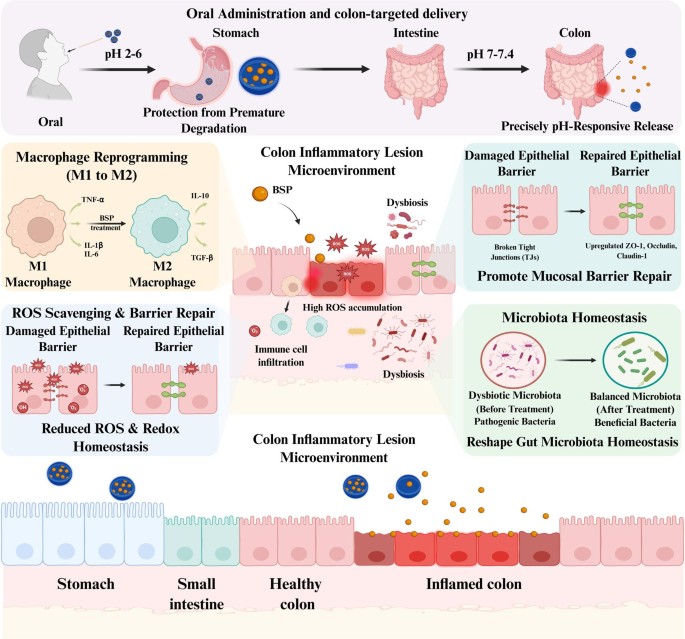
Colon-targeting pH-responsive Bletilla striata polysaccharide coacervate microdroplets for ulcerative colitis therapy via macrophage reprogramming

The study describes a new oral, colon‑targeted delivery system that improved outcomes in a mouse model of ulcerative colitis and shifted immune and microbiome markers—research that could inform future therapies focused...

Read Summary
A Phase 2 Study to Evaluate MORF-057 in Adults With Moderately to Severely Active Crohn's Disease
ClinicalTrials.gov

A Phase 2 Study to Evaluate MORF-057 in Adults With Moderately to Severely Active Crohn's Disease

This trial tests an oral integrin α4β7 inhibitor for Crohn’s disease, a new small-molecule approach aiming to block gut-specific immune cell trafficking similar to existing biologic anti‑integrin drugs. If effective and...

Read Summary
Mirikizumab Administered at the Same Time as Tirzepatide in Adult Participants With Moderately to Severely Active Ulcerative Colitis and Obesity or Overweight: Phase 3b Study
ClinicalTrials.gov

Mirikizumab Administered at the Same Time as Tirzepatide in Adult Participants With Moderately to Severely Active Ulcerative Colitis and Obesity or Overweight: Phase 3b Study

Combining a UC biologic (mirikizumab) with a weight-loss drug (tirzepatide) could address both intestinal inflammation and excess weight, which may be important for people with moderately to severely active ulcerative...

Read Summary
A Study of Eltrekibart and Mirikizumab in Adult Patients With Moderately to Severely Active Ulcerative Colitis
ClinicalTrials.gov

A Study of Eltrekibart and Mirikizumab in Adult Patients With Moderately to Severely Active Ulcerative Colitis

This trial tests two investigational agents (eltrekibart and mirikizumab) for moderate–severe ulcerative colitis, which may offer additional treatment options if proven safe and effective. It’s relevant to people whose...

Read Summary
Artificial intelligence in inflammatory bowel disease: From current evidence, clinical translation, and the road to precision medicine.
Chinese medical journal

Artificial intelligence in inflammatory bowel disease: From current evidence, clinical translation, and the road to precision medicine.

AI could help make assessments (endoscopy, histology, imaging) more objective and combine complex data to better predict disease course—potentially improving personalized care planning for people with IBD.

Read Summary
Lactobacillus pentosus Unraveling the probiotic evidence: howfrom fermented vegetables alleviates colitis by enlisting muribaculum to boost host phosphatidylcholine biosynthesis.
Food & function

Lactobacillus pentosus Unraveling the probiotic evidence: howfrom fermented vegetables alleviates colitis by enlisting muribaculum to boost host phosphatidylcholine biosynthesis.

This study suggests a specific probiotic strain may help reduce colitis in mice by changing the gut microbiome and boosting host phosphatidylcholine production — a pathway that could be relevant to gut barrier repair in...

Read Summary
Sociodemographic, Academic, and Professional Profile of Members of the Brazilian Organization for Crohn's Disease and Colitis (GEDIIB): A National Cross-Sectional Survey
Springer Science and Business Media LLC

Sociodemographic, Academic, and Professional Profile of Members of the Brazilian Organization for Crohn's Disease and Colitis (GEDIIB): A National Cross-Sectional Survey

Knowing the makeup and regional distribution of IBD specialists helps identify gaps in care access and guide training or policy efforts to expand specialist capacity in underserved areas.

Read Summary
Sanggenol L Regulates Nrf2/HO-1/p65 Signalling Pathways via Dextran Sulfate Sodium-Induced Ulcerative Colitis in Mice
Bratislava Medical Journal

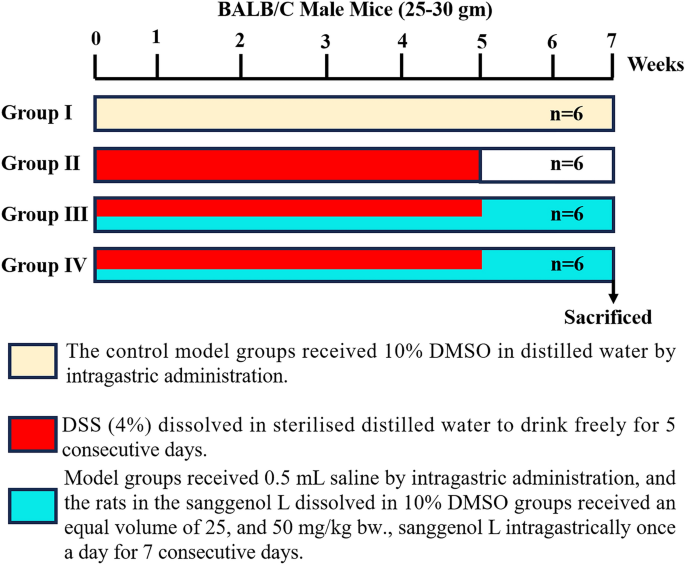
Sanggenol L Regulates Nrf2/HO-1/p65 Signalling Pathways via Dextran Sulfate Sodium-Induced Ulcerative Colitis in Mice

Researchers exploring new anti-inflammatory or antioxidant compounds for ulcerative colitis may find sanggenol L’s effects on Nrf2/HO-1 and TLR4/p65 signalling of interest. Patients should note this is early-stage,...

Read Summary
Fecal microbiota transplantation in ulcerative colitis: mucosal immune mechanisms and precision microbiota therapy
Frontiers in Immunology

Fecal microbiota transplantation in ulcerative colitis: mucosal immune mechanisms and precision microbiota therapy

FMT and precision microbiota therapies target the gut ecosystem, a modifiable factor in UC. For people with UC, this review explains potential mechanisms, where FMT has shown benefit in trials, and why it is still...

Read Summary
Association of serological markers with endoscopic mucosal healing and disease activity in patients with inflammatory bowel disease: a retrospective study
Frontiers in Immunology

Association of serological markers with endoscopic mucosal healing and disease activity in patients with inflammatory bowel disease: a retrospective study

Blood markers that correlate with endoscopic healing could help track inflammation noninvasively and may reduce the frequency of endoscopy if validated. For people with IBD, better blood-based tools could make monitoring...

Read Summary
A Novel Human Intestinal Organoid Platform with Peristaltic Function for Drug Discovery and Pre-Clinical Testing in GI Motility Disorders
NIH RePORTER

A Novel Human Intestinal Organoid Platform with Peristaltic Function for Drug Discovery and Pre-Clinical Testing in GI Motility Disorders

A validated human peristaltic intestinal organoid model could make preclinical testing more predictive for drugs affecting gut motility and reduce reliance on animal models.

Read Summary
Ulcerative colitis with a mutation in the HMBS gene associated with acute intermittent porphyria
Experimental and Clinical Gastroenterology

Ulcerative colitis with a mutation in the HMBS gene associated with acute intermittent porphyria

Finding a pathogenic HMBS variant in a child with extensive ulcerative colitis suggests rare genetic conditions (like acute intermittent porphyria) can appear alongside or mimic IBD and might affect symptoms or...

Read Summary
Features of the course and therapeutic strategy of ulcerative colitis in liver transplant recipients
Experimental and Clinical Gastroenterology

Features of the course and therapeutic strategy of ulcerative colitis in liver transplant recipients

People with IBD who undergo liver transplantation — especially those with PSC — can have different UC course and treatment needs because transplant immunosuppression and the liver disease itself affect the bowel.

Read Summary
Systematic Review: Evaluating the Prognostic Value of Granulomas in Crohn’s Disease
Digestive Diseases and Sciences

Systematic Review: Evaluating the Prognostic Value of Granulomas in Crohn’s Disease

Granulomas are a classic histologic feature of Crohn’s disease, so patients and clinicians may wonder whether their presence predicts worse disease or different treatment needs. This review shows existing studies are...

Read Summary
Current and emerging therapeutic strategies targeting adherent-invasive Escherichia coli in Crohn’s disease: a review
Gut Pathogens

Current and emerging therapeutic strategies targeting adherent-invasive Escherichia coli in Crohn’s disease: a review

Adherent-invasive E. coli (AIEC) is implicated in Crohn’s disease inflammation in some patients. This review maps possible ways to target AIEC specifically, which could lead to therapies that reduce infection-driven...

Read Summary
Lactobacillus johnsonii mediates the protective effects of pristimerin against ulcerative colitis and concomitant liver injury through remodeling hepatic lipid metabolism via LXRα-SCD1 axis.
Gut microbes

Lactobacillus johnsonii mediates the protective effects of pristimerin against ulcerative colitis and concomitant liver injury through remodeling hepatic lipid metabolism via LXRα-SCD1 axis.

The study identifies a gut bacteria–liver signaling axis (Lactobacillus johnsonii → hepatic LXRα–SCD1) that may explain how altered hepatic lipids contribute to UC and related liver injury, and shows pristimerin can...

Read Summary
Extraintestinal manifestations have a negative impact on Quality of Life of patients with Inflammatory Bowel Disease
Digestion

Extraintestinal manifestations have a negative impact on Quality of Life of patients with Inflammatory Bowel Disease

Extraintestinal manifestations are common in IBD and — according to this study — linked to significantly worse quality of life across social, systemic, intestinal, and emotional domains. Recognizing and treating EIMs may...

Read Summary
Editorial on ‘Lowering the C‐Reactive Protein ( CRP ) Threshold Improves Risk Stratification in Acute Ulcerative Colitis: A Propensity‐Matched Analysis’
Alimentary Pharmacology & Therapeutics

Editorial on ‘Lowering the C‐Reactive Protein ( CRP ) Threshold Improves Risk Stratification in Acute Ulcerative Colitis: A Propensity‐Matched Analysis’

Based on the title and source metadata, this appears to be a clinical study related to Ulcerative colitis, Inflammatory bowel disease, and CRP. The original article is from Alimentary Pharmacology & Therapeutics.

Read Summary
Management of endoscopic rectal activity in ulcerative colitis: real-world adherence to guidelines and clinical outcomes.
European journal of gastroenterology & hepatology

Management of endoscopic rectal activity in ulcerative colitis: real-world adherence to guidelines and clinical outcomes.

The study examines whether recommended management for rectal inflammation in UC is followed in routine care and whether following guidelines affects 12-month remission — important for patients and clinicians aiming for...

Read Summary
Factors associated with preference for in-person versus remote consultations in inflammatory bowel disease in the United Kingdom: secondary analysis of an online survey.
European journal of gastroenterology & hepatology

Factors associated with preference for in-person versus remote consultations in inflammatory bowel disease in the United Kingdom: secondary analysis of an online survey.

Patients and clinics are still deciding how much care can be done remotely. Knowing who prefers in-person versus remote visits helps tailor care so patients receive the visit type they need and want, and supports...

Read Summary
Standard malnutrition screening tools inadequately capture comprehensive nutritional needs in outpatients with inflammatory bowel disease.
Crohn's & colitis 360

Standard malnutrition screening tools inadequately capture comprehensive nutritional needs in outpatients with inflammatory bowel disease.

Standard measures like BMI and routine labs can miss muscle and fat depletion in IBD patients. Better screening plus access to dietitian assessment could find treatable malnutrition that affects recovery and quality of...

Read Summary
Magnoflorine, a dietary alkaloid from Alpinia oxyphylla fruit, ameliorates colitis by restoring intestinal barrier and dual modulation of JAK/STAT3 pathway.
Food chemistry

Magnoflorine, a dietary alkaloid from Alpinia oxyphylla fruit, ameliorates colitis by restoring intestinal barrier and dual modulation of JAK/STAT3 pathway.

The study identifies a food-derived compound that improved colitis in lab models and acted on JAK/STAT3 signaling and intestinal barrier proteins—pathways relevant to IBD inflammation and mucosal healing.

Read Summary
Immunomodulatory biomaterials as a novel therapeutic platform for inflammatory bowel disease.
Therapeutic advances in gastroenterology

Immunomodulatory biomaterials as a novel therapeutic platform for inflammatory bowel disease.

Biomaterials that directly modify immune responses could offer new localized, targeted ways to treat gut inflammation, potentially reducing reliance on systemic immunosuppressive drugs. This review summarizes preclinical...

Read Summary
Hierarchical correlates of sexual dysfunction in inflammatory bowel disease: Psychological burden outweighs disease activity and sarcopenia.
Journal of psychosomatic research

Hierarchical correlates of sexual dysfunction in inflammatory bowel disease: Psychological burden outweighs disease activity and sarcopenia.

Sexual dysfunction is common in IBD and—according to this study—appears more strongly linked to psychological and demographic factors than to disease activity or muscle loss. Recognizing and treating mental-health issues...

Read Summary
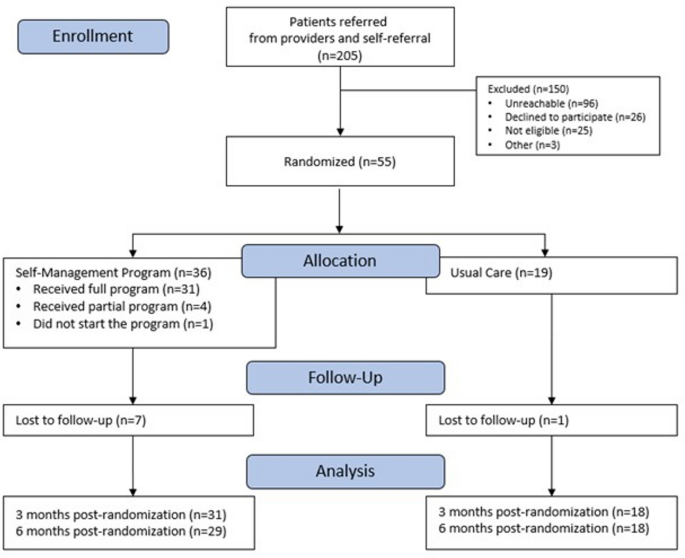
Feasibility, Acceptability, and Preliminary Effects of a Nurse-Delivered Self-Management Program for Individuals with Inflammatory Bowel Disease: A Pilot Randomized Controlled Trial
Digestive Diseases and Sciences

Feasibility, Acceptability, and Preliminary Effects of a Nurse-Delivered Self-Management Program for Individuals with Inflammatory Bowel Disease: A Pilot Randomized Controlled Trial

Self‑management programs delivered by nurses may help people with IBD improve daily functioning, confidence in managing their condition, and quality of life even when inflammation markers don’t change. That matters...

Read Summary