Tests and monitoring tools

Fecal calprotectin

Fecal calprotectin articles covering stool inflammation testing, flare monitoring, treatment response, and IBD research. Monitoring context emphasizes diagnosis, follow-up, disease activity, treatment response, and care decisions.

Page 3 of 4 · 163 articles

Rapid fecal lipidome profiling in inflammatory bowel disease: A novel approach for exploratory disease molecular characterization and therapeutic monitoring.
Journal of pharmaceutical and biomedical analysis

Rapid fecal lipidome profiling in inflammatory bowel disease: A novel approach for exploratory disease molecular characterization and therapeutic monitoring.

Non-invasive fecal lipid markers could help differentiate UC from CD and improve diagnostic molecular profiling in IBD if validated, which may be useful for patients and clinicians seeking less-invasive diagnostic tools.

Read Summary
Characterization of remission levels in patients with ulcerative colitis treated with 5-aminosalicylates: results of the cross-sectional CARUC-ASA study by the Belgian IBD Research and Development Group.
Journal of Crohn's & colitis

Characterization of remission levels in patients with ulcerative colitis treated with 5-aminosalicylates: results of the cross-sectional CARUC-ASA study by the Belgian IBD Research and Development Group.

The study evaluates how well first-line 5-ASA therapy achieves modern treatment targets (endoscopic, histologic, and biomarker remission) in real-world UC patients who are clinically in remission. Patients and clinicians...

Read Summary
Association of the DTI-ALPS Index with Sleep Disturbances and Intestinal Inflammation in Crohn's Disease: A Diffusion Tensor MRI Study.
Academic radiology

Association of the DTI-ALPS Index with Sleep Disturbances and Intestinal Inflammation in Crohn's Disease: A Diffusion Tensor MRI Study.

If confirmed, a brain perivascular/glymphatic change linked to intestinal inflammation could help explain why sleep problems are common in Crohn's disease and point to new research targets for symptom mechanisms and...

Read Summary
Beyond Clinical Toxicity: Repositioning the Truelove and Witts Criteria in the Treat-to-Target Era of Acute Severe Ulcerative Colitis
Gastroenterology Insights

Beyond Clinical Toxicity: Repositioning the Truelove and Witts Criteria in the Treat-to-Target Era of Acute Severe Ulcerative Colitis

The T&W criteria are still used to define severe UC on admission, but relying on them alone may delay recognition of steroid non‑response and escalation decisions. Integrating biomarkers, endoscopy, and imaging can help...

Read Summary
Circulating microRNAs as biomarkers of disease activity and treatment response in Crohn’s disease patients receiving infliximab or vedolizumab: a longitudinal cohort study
Frontiers in Medicine

Circulating microRNAs as biomarkers of disease activity and treatment response in Crohn’s disease patients receiving infliximab or vedolizumab: a longitudinal cohort study

If validated, blood microRNAs could become noninvasive biomarkers to help track inflammation and predict biochemical response to infliximab or vedolizumab in Crohn’s disease, complementing CRP and fecal calprotectin.

Read Summary
Bowel Wall Vascularization in Crohn’s Disease: Exploratory Comparison of Vendor-Derived Vascular Index, ImageJ-Based Quantification, and Blinded Video-Based Doppler Scoring
Diagnostics

Bowel Wall Vascularization in Crohn’s Disease: Exploratory Comparison of Vendor-Derived Vascular Index, ImageJ-Based Quantification, and Blinded Video-Based Doppler Scoring

Bowel wall vascularization on ultrasound is used to gauge transmural inflammation in Crohn’s disease. This study examines whether quantitative measures could make those assessments more objective and how technique and...

Read Summary
Multimodal monitoring of pan-enteric mucosal healing and biologic persistence in Crohn's disease-the MILESTONE-CD prospective cohort.
Journal of Crohn's & colitis

Multimodal monitoring of pan-enteric mucosal healing and biologic persistence in Crohn's disease-the MILESTONE-CD prospective cohort.

Measuring mucosal healing across the whole gut with stool markers, ultrasound, and capsule endoscopy may give a clearer picture of whether biologic treatment is working and help guide decisions about continuing or...

Read Summary
Long-Term Feasibility, Adherence, and Exploratory Clinical Outcomes of Crohn’s Disease Exclusion Diet Plus Partial Enteral Nutrition in Adults with Crohn’s Disease
Nutrients

Long-Term Feasibility, Adherence, and Exploratory Clinical Outcomes of Crohn’s Disease Exclusion Diet Plus Partial Enteral Nutrition in Adults with Crohn’s Disease

Diet-based therapies like CDED + PEN may help control Crohn’s symptoms and improve nutrition without adding medications. This study suggests some adults can maintain remission and gain nutritional benefits over a year...

Read Summary
The Fecal Immunoassay Occult Blood Test Combined With Calprotectin Sequential Linkage Imaging Endoscopy Screening Strategy for Monitoring Tumor Changes Associated With Long-duration Ulcerative Colitis
ClinicalTrials.gov

The Fecal Immunoassay Occult Blood Test Combined With Calprotectin Sequential Linkage Imaging Endoscopy Screening Strategy for Monitoring Tumor Changes Associated With Long-duration Ulcerative Colitis

This study could validate a noninvasive stool-test strategy (FIT + fecal calprotectin) to triage which long-standing UC patients need colonoscopy, potentially improving surveillance efficiency and adherence.

Read Summary
Prospective real-world experience with risankizumab in difficult-to-treat Crohn’s disease: results from the Dutch Initiative on Crohn and Colitis Registry
PubMed Central

Prospective real-world experience with risankizumab in difficult-to-treat Crohn’s disease: results from the Dutch Initiative on Crohn and Colitis Registry

The study provides real-world effectiveness and safety data for risankizumab in a largely difficult-to-treat Crohn's population, showing about half achieved corticosteroid-free clinical remission at 24 weeks —...

Read Summary
Real-world data on clinical response to inflammatory bowel disease biological treatments in patients with concurrent primary sclerosing cholangitis: a case-control study.
Gastroenterology report

Real-world data on clinical response to inflammatory bowel disease biological treatments in patients with concurrent primary sclerosing cholangitis: a case-control study.

This study suggests that people with PSC-IBD may respond differently to some biologic treatments: infliximab and vedolizumab had similar early effectiveness versus IBD alone, but ustekinumab showed a lower early response...

Read Summary
Infliximab originator and biosimilars have similar efficacy in children with inflammatory bowel disease.
Journal of pediatric gastroenterology and nutrition

Infliximab originator and biosimilars have similar efficacy in children with inflammatory bowel disease.

This large pediatric registry study suggests children starting infliximab biosimilars have similar 12‑month clinical outcomes and treatment durability as those starting the originator drug — reassuring for patients and...

Read Summary
Study of the Role of Pomegranate Juice Ellagitannins in the Modulation of Inflammation in Inflammatory Bowel Disease
ClinicalTrials.gov

Study of the Role of Pomegranate Juice Ellagitannins in the Modulation of Inflammation in Inflammatory Bowel Disease

This trial tests whether pomegranate juice can lower fecal calprotectin, a commonly used marker of intestinal inflammation, in people with IBD in remission. If effective, such a dietary approach could be of interest to...

Read Summary
STUDY OF THE ADDED VALUE OF A TRANSMURAL EVALUATION IN PATIENTS WITH CROHN'S DISEASE UNDER BIOTHERAPY WITH CLOSE FECAL CALPROTECTIN FOLLOW-UP
ClinicalTrials.gov

STUDY OF THE ADDED VALUE OF A TRANSMURAL EVALUATION IN PATIENTS WITH CROHN'S DISEASE UNDER BIOTHERAPY WITH CLOSE FECAL CALPROTECTIN FOLLOW-UP

The study tests whether adding MRI-based transmural assessment to a fecal-calprotectin–guided (CALM) strategy improves the ability to keep people with Crohn’s disease in corticosteroid-free clinical remission and may...

Read Summary
Fecal surrogate markers strongly correlate with endoscopic findings in pediatric onset inflammatory bowel disease: a retrospective study in Japan
Intestinal Research

Fecal surrogate markers strongly correlate with endoscopic findings in pediatric onset inflammatory bowel disease: a retrospective study in Japan

Noninvasive stool markers that track endoscopic inflammation could reduce the need for frequent pediatric endoscopies, easing burden and risk for children with IBD. Strong correlation with endoscopy suggests these tests...

Read Summary
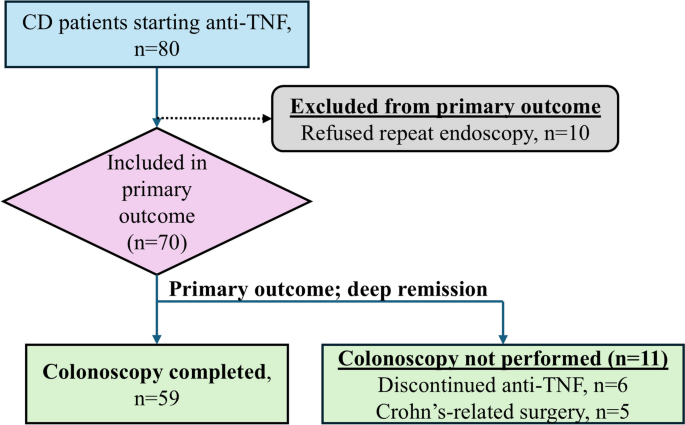
Pharmacometric Targets During Anti-TNF Induction and Their Association with Deep Remission in Pediatric Crohn’s Disease
Clinical Pharmacokinetics

Pharmacometric Targets During Anti-TNF Induction and Their Association with Deep Remission in Pediatric Crohn’s Disease

The study identifies specific induction exposure targets and biomarkers tied to higher chances of deep remission at 12 months in children on anti-TNF therapy, which could inform earlier dose optimization to improve...

Read Summary
Emerging role of intestinal ultrasound in detecting postoperative recurrence in Crohn's disease.
Gastroenterology report

Emerging role of intestinal ultrasound in detecting postoperative recurrence in Crohn's disease.

Noninvasive tools that reliably detect postoperative recurrence could reduce the need for frequent invasive endoscopy and help target earlier intervention for people with Crohn's disease after surgery.

Read Summary
Blood heavy metal and trace element levels in newly diagnosed cases of inflammatory bowel disease.
Pakistan journal of medical sciences

Blood heavy metal and trace element levels in newly diagnosed cases of inflammatory bowel disease.

The study suggests nickel accumulation and iron deficiency may be linked with more severe IBD. If confirmed, blood metal and micronutrient levels could help researchers understand disease mechanisms and guide nutritional...

Read Summary
Predictive Efficacy of Fecal Calprotectin Assay by Magnetic Particle Chemiluminescence for Mucosal Healing in Moderate-to-Severe Ulcerative Colitis Patients Undergoing Initial Biologic Therapy(PRECAL)
ClinicalTrials.gov

Predictive Efficacy of Fecal Calprotectin Assay by Magnetic Particle Chemiluminescence for Mucosal Healing in Moderate-to-Severe Ulcerative Colitis Patients Undergoing Initial Biologic Therapy(PRECAL)

If validated, an early drop in fecal calprotectin could help identify patients on biologic therapy who are likely to achieve mucosal healing without waiting for invasive endoscopy, allowing earlier decisions about...

Read Summary
Reduced fecal GP2 levels in ulcerative colitis associate with inflammatory activity and microbial composition.
Clinica chimica acta; international journal of clinical chemistry

Reduced fecal GP2 levels in ulcerative colitis associate with inflammatory activity and microbial composition.

If fecal GP2 reliably reflects UC activity and microbial changes, it could become a noninvasive marker to track inflammation or to study disease mechanisms that differ between UC and CD.

Read Summary
Remission duration according to dietary adherence in paediatric mild to moderate Crohn's disease treated with CDED + PEN.
Przeglad gastroenterologiczny

Remission duration according to dietary adherence in paediatric mild to moderate Crohn's disease treated with CDED + PEN.

Dietary therapy (CDED + PEN) was associated with longer remission when families adhered well; since adherence varies, support from a dietitian matters for keeping children in remission.

Read Summary
The Diagnostic Accuracy of Fecal Calprotectin for Colonoscopic Abnormalities in Patients With Chronic Diarrhea.
Journal of gastroenterology and hepatology

The Diagnostic Accuracy of Fecal Calprotectin for Colonoscopic Abnormalities in Patients With Chronic Diarrhea.

Fecal calprotectin measured by a point‑of‑care CGICA assay showed high accuracy for identifying colorectal inflammation and IBD in patients with chronic diarrhea, which could help avoid some unnecessary colonoscopies...

Read Summary
Crohn᾿s Disease and Ulcerative Colitis: The Role of Endoscopic, Hemogram-derived, Nutritional, and Hepatic Scores
Journal of Gastrointestinal and Liver Diseases

Crohn᾿s Disease and Ulcerative Colitis: The Role of Endoscopic, Hemogram-derived, Nutritional, and Hepatic Scores

Non-invasive biomarkers that reflect mucosal inflammation and systemic disease activity could help reduce reliance on frequent endoscopy and guide monitoring for people with Crohn’s disease or ulcerative colitis.

Read Summary
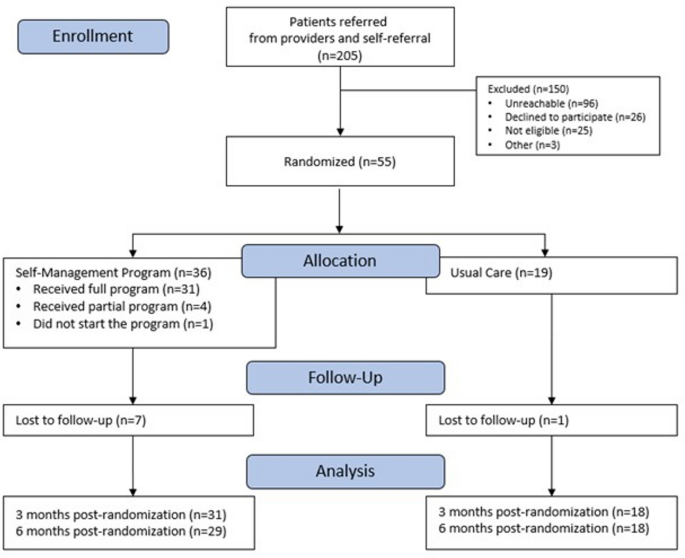
Feasibility, Acceptability, and Preliminary Effects of a Nurse-Delivered Self-Management Program for Individuals with Inflammatory Bowel Disease: A Pilot Randomized Controlled Trial
Digestive Diseases and Sciences

Feasibility, Acceptability, and Preliminary Effects of a Nurse-Delivered Self-Management Program for Individuals with Inflammatory Bowel Disease: A Pilot Randomized Controlled Trial

Self‑management programs delivered by nurses may help people with IBD improve daily functioning, confidence in managing their condition, and quality of life even when inflammation markers don’t change. That matters...

Read Summary
Underevaluation of bowel urgency in clinical care: patient experiences and outcomes in ulcerative colitis: a retrospective cohort study
Inflammatory Bowel Diseases

Underevaluation of bowel urgency in clinical care: patient experiences and outcomes in ulcerative colitis: a retrospective cohort study

Bowel urgency is a common symptom that may predict higher risk of treatment escalation, hospitalization, or surgery in UC even when bleeding and stool frequency look controlled. Better assessment of urgency in clinic...

Read Summary
Comparative performance of intestinal ultrasound activity indices in pediatric ulcerative colitis: a prospective study.
Journal of Crohn's & colitis

Comparative performance of intestinal ultrasound activity indices in pediatric ulcerative colitis: a prospective study.

Noninvasive monitoring matters for children with UC because endoscopy is burdensome. If ultrasound (and simple measures like bowel wall thickness) can reliably detect moderate-to-severe disease, families may avoid some...

Read Summary
Intestinal ultrasound in inflammatory bowel disease: diagnostic accuracy and impact on clinical decision making in a New Zealand tertiary centre.
The New Zealand medical journal

Intestinal ultrasound in inflammatory bowel disease: diagnostic accuracy and impact on clinical decision making in a New Zealand tertiary centre.

Point-of-care intestinal ultrasound (IUS) showed strong agreement with follow-up tests and often changed management the same day in a New Zealand IBD cohort. Patients and clinicians may be able to use IUS to monitor...

Read Summary
Bowel Urgency in Ulcerative Colitis Is Associated With Clinical Endpoints, Health-Related Quality of Life, and Biomarkers: Data From the Etrasimod ELEVATE UC 52 Trial
Crohn's & Colitis 360

Bowel Urgency in Ulcerative Colitis Is Associated With Clinical Endpoints, Health-Related Quality of Life, and Biomarkers: Data From the Etrasimod ELEVATE UC 52 Trial

Bowel urgency is a common, disruptive UC symptom; this trial analysis shows urgency improvements with etrasimod track with clinical remission, endoscopic improvement, better quality of life, and lower inflammatory...

Read Summary
Current and novel biomarkers for predicting and assessing therapeutic response in inflammatory bowel disease: a systematic review.
Therapeutic advances in gastroenterology

Current and novel biomarkers for predicting and assessing therapeutic response in inflammatory bowel disease: a systematic review.

People with IBD and their clinicians want ways to predict which advanced therapy will work best. This review summarizes current evidence and shows that, despite many studies, no biomarker is reliably ready for routine...

Read Summary
Association Between the C-Reactive Protein-Albumin-Lymphocyte (CALLY) Index and Tissue-Confirmed Cytomegalovirus Colitis in Patients with Active Ulcerative Colitis
Diagnostics

Association Between the C-Reactive Protein-Albumin-Lymphocyte (CALLY) Index and Tissue-Confirmed Cytomegalovirus Colitis in Patients with Active Ulcerative Colitis

CMV reactivation can worsen outcomes in active UC and influence treatment choices; clinicians and patients may benefit from additional, easy-to-measure markers that flag higher risk of tissue CMV and prompt targeted...

Read Summary
Evaluation of serum human galectin 3 as a marker of activity in inflammatory bowel disease in comparison to fecal calprotectin.
The Egyptian journal of immunology

Evaluation of serum human galectin 3 as a marker of activity in inflammatory bowel disease in comparison to fecal calprotectin.

Noninvasive blood biomarkers that track IBD activity could reduce reliance on repeat endoscopy. If validated, serum galectin‑3 might complement fecal calprotectin and CRP to help identify active disease.

Read Summary
Liver findings in newly diagnosed, treatment-naive patients with Crohn's disease: a preliminary study of MRI proton density fat fraction and extracellular volume fraction.
BMC medical imaging

Liver findings in newly diagnosed, treatment-naive patients with Crohn's disease: a preliminary study of MRI proton density fat fraction and extracellular volume fraction.

People with Crohn’s disease can have liver involvement that may be missed on routine exams. Quantitative liver MRI measures (fat fraction and extracellular volume) could help detect and monitor subtle liver injury...

Read Summary
Machine Learning-Based Prediction of Treatment Response to Vitamin D3 in Adolescents and Young Adults with Inflammatory Bowel Disease: A Prospective, Open-Label, Alternation-Based Comparative Study
Biomedicines

Machine Learning-Based Prediction of Treatment Response to Vitamin D3 in Adolescents and Young Adults with Inflammatory Bowel Disease: A Prospective, Open-Label, Alternation-Based Comparative Study

Vitamin D supplementation is commonly considered in people with IBD because deficiency is frequent and low vitamin D may relate to inflammation.

Read Summary