All topics

Tests and monitoring

Colonoscopy, endoscopy, fecal calprotectin, CRP, imaging, intestinal ultrasound, and monitoring research.

Page 26 of 33 · 1559 articles

Effectiveness and Safety of Risankizumab in Crohn Disease After Failure of a First Line of Advanced Therapy: A Long-Term, Real-Life Study.
American journal of therapeutics

Effectiveness and Safety of Risankizumab in Crohn Disease After Failure of a First Line of Advanced Therapy: A Long-Term, Real-Life Study.

This real-world, multicenter study suggests risankizumab can induce clinical and steroid-free remission and mucosal healing in many patients with Crohn disease who previously failed advanced therapies, which may be...

Read Summary
Classifications of rheumatological extraintestinal manifestations in inflammatory bowel disease: Unmet needs in clinical practice and trials.
Inflammatory bowel diseases

Classifications of rheumatological extraintestinal manifestations in inflammatory bowel disease: Unmet needs in clinical practice and trials.

Rheumatological EIMs (notably joint inflammation) are frequent in IBD and affect quality of life; inconsistent definitions and lack of validated PROs make it harder for patients and clinicians to understand and compare...

Read Summary
A Study Investigating Oral Ozanimod (RPC1063) in Pediatric Participants With Moderate to Severe Active Ulcerative Colitis
ClinicalTrials.gov

A Study Investigating Oral Ozanimod (RPC1063) in Pediatric Participants With Moderate to Severe Active Ulcerative Colitis

This trial explores whether oral ozanimod can induce and maintain remission in children and adolescents with moderate to severe ulcerative colitis who have not responded to standard therapies. Pediatric-specific evidence...

Read Summary
An Early-Stage Study in Multiple Clinics of How Afimkibart May Affect the Body's Processing of Medicines That Rely on Cytochrome P450 Enzymes in Participants With Ulcerative Colitis
ClinicalTrials.gov

An Early-Stage Study in Multiple Clinics of How Afimkibart May Affect the Body's Processing of Medicines That Rely on Cytochrome P450 Enzymes in Participants With Ulcerative Colitis

Patients with UC often take multiple medicines that rely on CYP enzymes. This study is checking if afimkibart affects how those drugs are processed, which could matter for safety or dosing if the drug proceeds in...

Read Summary
Development and External Validation of a Machine Learning Model for Pre-Endoscopic Prediction of Montreal Disease Extent (E1/E2/E3) in Ulcerative Colitis Using Symptoms, Signs, and Laboratory Tests: A Multicenter Retrospective Observational Study
ClinicalTrials.gov

Development and External Validation of a Machine Learning Model for Pre-Endoscopic Prediction of Montreal Disease Extent (E1/E2/E3) in Ulcerative Colitis Using Symptoms, Signs, and Laboratory Tests: A Multicenter Retrospective Observational Study

A validated pre-endoscopic model could help estimate UC disease extent before colonoscopy, aiding clinical triage and planning without replacing endoscopy.

Read Summary
Predictive Efficacy of Fecal Calprotectin Assay by Magnetic Particle Chemiluminescence for Mucosal Healing in Moderate-to-Severe Ulcerative Colitis Patients Undergoing Initial Biologic Therapy(PRECAL)
ClinicalTrials.gov

Predictive Efficacy of Fecal Calprotectin Assay by Magnetic Particle Chemiluminescence for Mucosal Healing in Moderate-to-Severe Ulcerative Colitis Patients Undergoing Initial Biologic Therapy(PRECAL)

If validated, an early drop in fecal calprotectin could help identify patients on biologic therapy who are likely to achieve mucosal healing without waiting for invasive endoscopy, allowing earlier decisions about...

Read Summary
Reduced fecal GP2 levels in ulcerative colitis associate with inflammatory activity and microbial composition.
Clinica chimica acta; international journal of clinical chemistry

Reduced fecal GP2 levels in ulcerative colitis associate with inflammatory activity and microbial composition.

If fecal GP2 reliably reflects UC activity and microbial changes, it could become a noninvasive marker to track inflammation or to study disease mechanisms that differ between UC and CD.

Read Summary
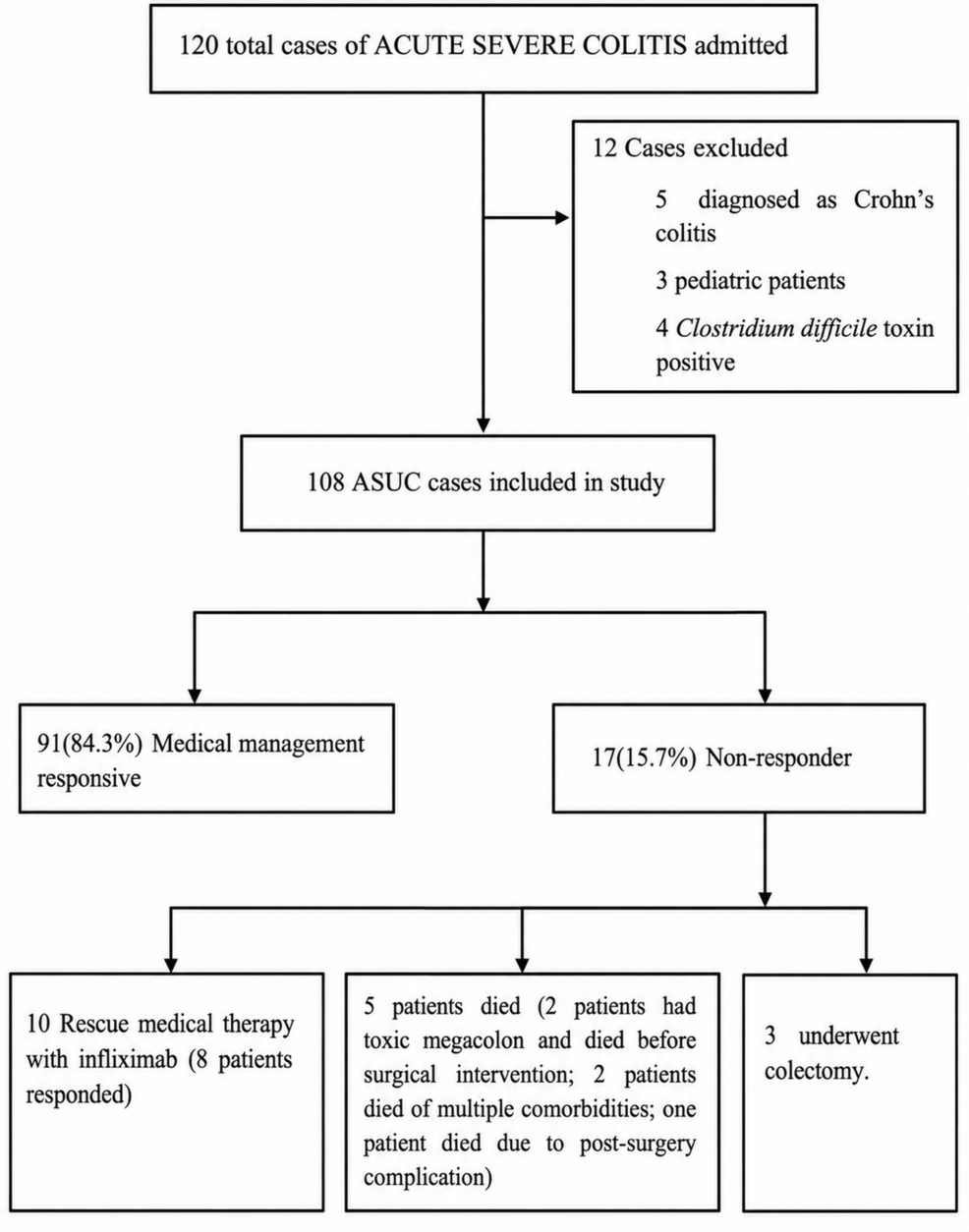
New Diagnostic Criteria for Acute Severe Ulcerative Colitis in the Modern Treatment Era: A Modified Delphi Consensus by REFINED-ASUC.
Clinical gastroenterology and hepatology : the official clinical practice journal of the American Gastroenterological Association

New Diagnostic Criteria for Acute Severe Ulcerative Colitis in the Modern Treatment Era: A Modified Delphi Consensus by REFINED-ASUC.

The 1955 Truelove and Witts criteria do not account for patients already on modern outpatient therapies. Updated consensus criteria could change how ASUC is recognized and triaged in current clinical practice.

Read Summary
Multicentre retrospective real-world evidence study evaluating the effectiveness and safety of mirikizumab in patients with moderately to severely active ulcerative colitis.
Przeglad gastroenterologiczny

Multicentre retrospective real-world evidence study evaluating the effectiveness and safety of mirikizumab in patients with moderately to severely active ulcerative colitis.

Real-world data show how mirikizumab performs outside clinical trials, especially in patients previously exposed to multiple advanced therapies. That can help patients and clinicians weigh expectations for effectiveness...

Read Summary
Effectiveness of tofacitinib as rescue therapy in biological-naive patients with steroid-refractory acute severe ulcerative colitis: a multicentric retrospective analysis.
European journal of gastroenterology & hepatology

Effectiveness of tofacitinib as rescue therapy in biological-naive patients with steroid-refractory acute severe ulcerative colitis: a multicentric retrospective analysis.

This study suggests tofacitinib may work quickly as a rescue option for biologic‑naive patients with steroid‑refractory ASUC and that many achieved steroid‑free remission by 24 weeks — information that could matter when...

Read Summary
Remission duration according to dietary adherence in paediatric mild to moderate Crohn's disease treated with CDED + PEN.
Przeglad gastroenterologiczny

Remission duration according to dietary adherence in paediatric mild to moderate Crohn's disease treated with CDED + PEN.

Dietary therapy (CDED + PEN) was associated with longer remission when families adhered well; since adherence varies, support from a dietitian matters for keeping children in remission.

Read Summary
Drug-associated inflammatory bowel disease: a real-world pharmacovigilance study using the FAERS and JADER databases.
Frontiers in immunology

Drug-associated inflammatory bowel disease: a real-world pharmacovigilance study using the FAERS and JADER databases.

This paper systematically catalogs drugs that have been reported with new or worsening IBD in two large pharmacovigilance databases. Knowing which medications generate strong reporting signals can help clinicians and...

Read Summary
Subcutaneous infliximab in pediatric inflammatory bowel disease: Sustained remission, predictable pharmacokinetics, and real-world US implementation.
Journal of pediatric gastroenterology and nutrition

Subcutaneous infliximab in pediatric inflammatory bowel disease: Sustained remission, predictable pharmacokinetics, and real-world US implementation.

Subcutaneous infliximab could offer children with IBD a more convenient dosing route with higher, steadier drug levels while maintaining remission. Insurance and labeling barriers affected access in this US cohort.

Read Summary
Upadacitinib as a rescue therapy for steroid- and infliximab-refractory acute severe ulcerative colitis: short- and long-term effectiveness and safety in a multicenter cohort study
Inflammatory Bowel Diseases

Upadacitinib as a rescue therapy for steroid- and infliximab-refractory acute severe ulcerative colitis: short- and long-term effectiveness and safety in a multicenter cohort study

For patients and clinicians facing steroid- and infliximab-refractory acute severe ulcerative colitis, upadacitinib may be a third-line medical option that can produce rapid symptom and CRP improvement and allow some...

Read Summary
FUT2-mediated α1,2-fucosylation in inflammatory bowel disease: mechanisms and translational potential.
Molecular biology reports

FUT2-mediated α1,2-fucosylation in inflammatory bowel disease: mechanisms and translational potential.

FUT2 connects genetics, mucosal sugars, and the gut microbiome — pathways that could help explain why some people with IBD have different microbiomes or disease risk. If validated in trials, FUT2-targeted or...

Read Summary
Macrophage-Centered Integration of Single-Cell and Bulk Transcriptomic Data Identifies CCL3, CCL4, and JUNB as Inflammatory Regulatory Signatures in Ulcerative Colitis
Genes

Macrophage-Centered Integration of Single-Cell and Bulk Transcriptomic Data Identifies CCL3, CCL4, and JUNB as Inflammatory Regulatory Signatures in Ulcerative Colitis

Identifies macrophage-linked genes (CCL3, CCL4, JUNB) that are strongly upregulated in ulcerative colitis and may help explain immune-cell remodeling in the colon. These genes could serve as biomarkers or starting points...

Read Summary
Safety and Efficacy of a STOPping Strategy Versus Classical Maintenance Dose of JAK Inhibitors in Deep Remission Patients With Ulcerative Colitis
ClinicalTrials.gov

Safety and Efficacy of a STOPping Strategy Versus Classical Maintenance Dose of JAK Inhibitors in Deep Remission Patients With Ulcerative Colitis

This trial tests whether people with UC in deep remission can safely stop JAK inhibitor therapy — potentially reducing long-term exposure and associated safety concerns while preserving disease control and quality of...

Read Summary
A Phase 2a Safety and Efficacy Open-Label Study of Tulisokibart (MK-7240/PRA023) in Participants With Moderately to Severely Active Crohn's Disease (MK-7240-006)
ClinicalTrials.gov

A Phase 2a Safety and Efficacy Open-Label Study of Tulisokibart (MK-7240/PRA023) in Participants With Moderately to Severely Active Crohn's Disease (MK-7240-006)

This Phase 2a trial tested a new investigational drug, tulisokibart, in people with moderately to severely active Crohn’s disease who have not done well on prior therapies — so patients and clinicians watching new...

Read Summary
Characterization of Colorectal Dysplasic Lesions and Stratification of Their Evolving Risk in Inflammatory Bowel Disease Patients: a Prospective, Observational and Multicenter Study
ClinicalTrials.gov

Characterization of Colorectal Dysplasic Lesions and Stratification of Their Evolving Risk in Inflammatory Bowel Disease Patients: a Prospective, Observational and Multicenter Study

The study will prospectively evaluate how often dysplasia occurs, how lesions look and behave after endoscopic resection, and what factors predict local or distant recurrence—information that could change surveillance...

Read Summary
Intestinal ultrasound for the detection of postoperative recurrence in Crohn's disease: a systematic review and meta-analysis.
Journal of Crohn's & colitis

Intestinal ultrasound for the detection of postoperative recurrence in Crohn's disease: a systematic review and meta-analysis.

Detecting Crohn’s recurrence after bowel surgery is important because recurrence can occur without symptoms. A reliable non-invasive test like intestinal ultrasound could reduce the need for repeated colonoscopies and...

Read Summary
Corticosteroid-sparing effects of risankizumab versus ustekinumab in patients with moderately to severely active Crohn's disease: post hoc results from the phase 3b SEQUENCE trial.
Journal of Crohn's & colitis

Corticosteroid-sparing effects of risankizumab versus ustekinumab in patients with moderately to severely active Crohn's disease: post hoc results from the phase 3b SEQUENCE trial.

For people with moderate–severe Crohn’s disease who failed anti‑TNF drugs, this trial suggests risankizumab may achieve higher corticosteroid‑free clinical and endoscopic remission than ustekinumab, which could mean...

Read Summary
Translation and Spanish validation of the Quality of Life Questionnaire for patients with perianal fistula in Crohn's disease (Sp CAF-QoL Scale).
Revista espanola de enfermedades digestivas

Translation and Spanish validation of the Quality of Life Questionnaire for patients with perianal fistula in Crohn's disease (Sp CAF-QoL Scale).

Perianal fistulas in Crohn's disease significantly affect quality of life, and this study provides an initially validated Spanish tool to measure that impact, enabling better assessment in Spanish-speaking patients and...

Read Summary
Sequence-robust MRI asymmetry measures for the detection of anoperineal lesions in Crohn’s disease on axial pelvic MRI scans
PLOS One

Sequence-robust MRI asymmetry measures for the detection of anoperineal lesions in Crohn’s disease on axial pelvic MRI scans

Automated, sequence-robust MRI measures could help standardize detection and localization of perianal anoperineal lesions in Crohn’s disease, which is relevant for diagnosis and management of perianal complications.

Read Summary
Exclusive enteral nutrition containing transforming growth factor‐β improves intestinal barrier function in a colitis mouse model
Journal of Pediatric Gastroenterology and Nutrition

Exclusive enteral nutrition containing transforming growth factor‐β improves intestinal barrier function in a colitis mouse model

The study investigates how components of exclusive enteral nutrition (EEN), particularly transforming growth factor‑β (TGF‑β), may help restore intestinal barrier function after colitis. That could help explain why EEN...

Read Summary
Response-aware molecular subtyping of ulcerative colitis for patient stratification via interpretable machine learning.
Computational biology and chemistry

Response-aware molecular subtyping of ulcerative colitis for patient stratification via interpretable machine learning.

This research links molecular subtypes of ulcerative colitis to infliximab (anti-TNF) response using an interpretable machine-learning method, which could help identify which patients are more or less likely to respond...

Read Summary
Oxidative Stress in Inflammatory Bowel Disease: From Redox Dysregulation to Translational Targeting
Antioxidants

Oxidative Stress in Inflammatory Bowel Disease: From Redox Dysregulation to Translational Targeting

Oxidative stress may help explain some biological drivers of inflammation in Crohn’s disease and ulcerative colitis and could become a target for biomarkers or therapies in the future. Right now, the evidence is...

Read Summary
Cryptogenic Multifocal Ulcerating Stenosing Enteritis (CMUSE) in a Patient with Down Syndrome: A Case Report
Reports — Medical Cases Images and Videos

Cryptogenic Multifocal Ulcerating Stenosing Enteritis (CMUSE) in a Patient with Down Syndrome: A Case Report

CMUSE can closely mimic Crohn's disease and may require surgery for diagnosis and symptom relief. Recognizing it can change diagnostic pathways and multidisciplinary management for people with recurrent small-bowel...

Read Summary
The ‘Cross‐Trust’ Histopathology Multidisciplinary Team: Report of meeting outputs and impact on paediatric inflammatory bowel disease management in a UK tertiary centre
JPGN Reports

The ‘Cross‐Trust’ Histopathology Multidisciplinary Team: Report of meeting outputs and impact on paediatric inflammatory bowel disease management in a UK tertiary centre

A cross‑trust histopathology MDT helped reclassify diagnoses in a substantial proportion of discussed paediatric IBD cases and occasionally changed management or transition planning, which could affect treatment...

Read Summary