All topics

Tests and monitoring

Colonoscopy, endoscopy, fecal calprotectin, CRP, imaging, intestinal ultrasound, and monitoring research.

Page 27 of 33 · 1559 articles

From tissue to blood: an integrated multi-omics signature identifies fibrogenesis and neutrophil activation as key drivers of ulcerative colitis severity
Frontiers in Immunology

From tissue to blood: an integrated multi-omics signature identifies fibrogenesis and neutrophil activation as key drivers of ulcerative colitis severity

The study links tissue and blood molecular changes to UC severity, suggesting candidate mechanisms (fibrogenesis, neutrophil activation) that could lead to biomarkers or new therapeutic targets. Understanding severity...


Read Summary
The Diagnostic Accuracy of Fecal Calprotectin for Colonoscopic Abnormalities in Patients With Chronic Diarrhea.
Journal of gastroenterology and hepatology

The Diagnostic Accuracy of Fecal Calprotectin for Colonoscopic Abnormalities in Patients With Chronic Diarrhea.

Fecal calprotectin measured by a point‑of‑care CGICA assay showed high accuracy for identifying colorectal inflammation and IBD in patients with chronic diarrhea, which could help avoid some unnecessary colonoscopies...

Read Summary
Crohn᾿s Disease and Ulcerative Colitis: The Role of Endoscopic, Hemogram-derived, Nutritional, and Hepatic Scores
Journal of Gastrointestinal and Liver Diseases

Crohn᾿s Disease and Ulcerative Colitis: The Role of Endoscopic, Hemogram-derived, Nutritional, and Hepatic Scores

Non-invasive biomarkers that reflect mucosal inflammation and systemic disease activity could help reduce reliance on frequent endoscopy and guide monitoring for people with Crohn’s disease or ulcerative colitis.

Read Summary
Association of serological markers with endoscopic mucosal healing and disease activity in patients with inflammatory bowel disease: a retrospective study
Frontiers in Immunology

Association of serological markers with endoscopic mucosal healing and disease activity in patients with inflammatory bowel disease: a retrospective study

Blood markers that correlate with endoscopic healing could help track inflammation noninvasively and may reduce the frequency of endoscopy if validated. For people with IBD, better blood-based tools could make monitoring...

Read Summary
A Novel Human Intestinal Organoid Platform with Peristaltic Function for Drug Discovery and Pre-Clinical Testing in GI Motility Disorders
NIH RePORTER

A Novel Human Intestinal Organoid Platform with Peristaltic Function for Drug Discovery and Pre-Clinical Testing in GI Motility Disorders

A validated human peristaltic intestinal organoid model could make preclinical testing more predictive for drugs affecting gut motility and reduce reliance on animal models.

Read Summary
Ulcerative colitis with a mutation in the HMBS gene associated with acute intermittent porphyria
Experimental and Clinical Gastroenterology

Ulcerative colitis with a mutation in the HMBS gene associated with acute intermittent porphyria

Finding a pathogenic HMBS variant in a child with extensive ulcerative colitis suggests rare genetic conditions (like acute intermittent porphyria) can appear alongside or mimic IBD and might affect symptoms or...

Read Summary
Systematic Review: Evaluating the Prognostic Value of Granulomas in Crohn’s Disease
Digestive Diseases and Sciences

Systematic Review: Evaluating the Prognostic Value of Granulomas in Crohn’s Disease

Granulomas are a classic histologic feature of Crohn’s disease, so patients and clinicians may wonder whether their presence predicts worse disease or different treatment needs. This review shows existing studies are...

Read Summary
Editorial on ‘Lowering the C‐Reactive Protein ( CRP ) Threshold Improves Risk Stratification in Acute Ulcerative Colitis: A Propensity‐Matched Analysis’
Alimentary Pharmacology & Therapeutics

Editorial on ‘Lowering the C‐Reactive Protein ( CRP ) Threshold Improves Risk Stratification in Acute Ulcerative Colitis: A Propensity‐Matched Analysis’

Based on the title and source metadata, this appears to be a clinical study related to Ulcerative colitis, Inflammatory bowel disease, and CRP. The original article is from Alimentary Pharmacology & Therapeutics.

Read Summary
Management of endoscopic rectal activity in ulcerative colitis: real-world adherence to guidelines and clinical outcomes.
European journal of gastroenterology & hepatology

Management of endoscopic rectal activity in ulcerative colitis: real-world adherence to guidelines and clinical outcomes.

The study examines whether recommended management for rectal inflammation in UC is followed in routine care and whether following guidelines affects 12-month remission — important for patients and clinicians aiming for...

Read Summary
Standard malnutrition screening tools inadequately capture comprehensive nutritional needs in outpatients with inflammatory bowel disease.
Crohn's & colitis 360

Standard malnutrition screening tools inadequately capture comprehensive nutritional needs in outpatients with inflammatory bowel disease.

Standard measures like BMI and routine labs can miss muscle and fat depletion in IBD patients. Better screening plus access to dietitian assessment could find treatable malnutrition that affects recovery and quality of...

Read Summary
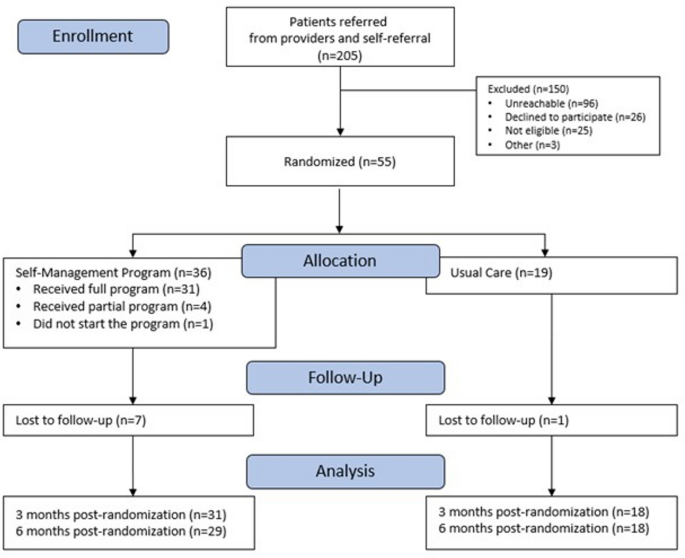
Feasibility, Acceptability, and Preliminary Effects of a Nurse-Delivered Self-Management Program for Individuals with Inflammatory Bowel Disease: A Pilot Randomized Controlled Trial
Digestive Diseases and Sciences

Feasibility, Acceptability, and Preliminary Effects of a Nurse-Delivered Self-Management Program for Individuals with Inflammatory Bowel Disease: A Pilot Randomized Controlled Trial

Self‑management programs delivered by nurses may help people with IBD improve daily functioning, confidence in managing their condition, and quality of life even when inflammation markers don’t change. That matters...

Read Summary
Lowering the C-Reactive Protein (CRP) Threshold Improves Risk Stratification in Acute Ulcerative Colitis: A Propensity-Matched Analysis.
Alimentary pharmacology & therapeutics

Lowering the C-Reactive Protein (CRP) Threshold Improves Risk Stratification in Acute Ulcerative Colitis: A Propensity-Matched Analysis.

People hospitalized with ulcerative colitis who don’t meet classic severe-disease criteria can still face meaningful colectomy risk. Using a lower CRP cutoff might help clinicians identify more high-risk patients...

Read Summary
Lowering the C‐Reactive Protein ( CRP ) Threshold Improves Risk Stratification in Acute Ulcerative Colitis: A Propensity‐Matched Analysis
Alimentary Pharmacology & Therapeutics

Lowering the C‐Reactive Protein ( CRP ) Threshold Improves Risk Stratification in Acute Ulcerative Colitis: A Propensity‐Matched Analysis

Lowering the CRP cutoff could help hospitals identify hospitalized UC patients at higher risk of needing surgery who are currently classified as less severe. That may affect monitoring and treatment decisions during...

Read Summary
Circulating multi-omic signature of disease severity and cholangiocarcinoma in primary sclerosing cholangitis.
Hepatology communications

Circulating multi-omic signature of disease severity and cholangiocarcinoma in primary sclerosing cholangitis.

PSC can progress to cirrhosis and cholangiocarcinoma; circulating multi-omic signatures that track severity and cancer-associated changes could help explain disease biology and lead to biomarkers for risk stratification...

Read Summary
Absolute risk of malignancy by treatment in patients with Crohn's disease compared to the general population: a nationwide population-based cohort study.
The American journal of gastroenterology

Absolute risk of malignancy by treatment in patients with Crohn's disease compared to the general population: a nationwide population-based cohort study.

People with Crohn's disease and their clinicians often ask how different treatments affect cancer risk. This large nationwide study provides real-world estimates of absolute excess cancer cases by treatment group, which...

Read Summary
Probiotic‐Derived Vesicles Rectally Delivered via Thermo‐Gelling Copolymer Promote Mucosal Healing and Reduce Inflammation in Ulcerative Colitis
Advanced Science

Probiotic‐Derived Vesicles Rectally Delivered via Thermo‐Gelling Copolymer Promote Mucosal Healing and Reduce Inflammation in Ulcerative Colitis

This study describes a local rectal therapy that combines mesalamine with probiotic‑derived extracellular vesicles to promote mucosal healing and reduce inflammation in ulcerative colitis models, which could point toward...

Read Summary
Underevaluation of bowel urgency in clinical care: patient experiences and outcomes in ulcerative colitis: a retrospective cohort study
Inflammatory Bowel Diseases

Underevaluation of bowel urgency in clinical care: patient experiences and outcomes in ulcerative colitis: a retrospective cohort study

Bowel urgency is a common symptom that may predict higher risk of treatment escalation, hospitalization, or surgery in UC even when bleeding and stool frequency look controlled. Better assessment of urgency in clinic...

Read Summary
High-grade Dysplasia with Pseudocarcinomatous Invasion Mimicking Invasive Carcinoma in a Patient with Ulcerative Colitis
Journal of Gastrointestinal and Liver Diseases

High-grade Dysplasia with Pseudocarcinomatous Invasion Mimicking Invasive Carcinoma in a Patient with Ulcerative Colitis

People with ulcerative colitis undergo surveillance for dysplasia because of an increased risk of colorectal cancer. This case highlights a pathology pattern (pseudocarcinomatous invasion) that can mimic invasive...

Read Summary
Artificial intelligence assessment of endoscopic severity and extent: A machine learning approach to continuous evaluation of endoscopic inflammation in ulcerative colitis
Inflammatory Bowel Diseases

Artificial intelligence assessment of endoscopic severity and extent: A machine learning approach to continuous evaluation of endoscopic inflammation in ulcerative colitis

A more detailed, reproducible measure of endoscopic inflammation could better reflect total disease burden and reduce variability from human readers. That may matter for monitoring disease activity, judging treatment...

Read Summary
A Phase 2 Study of D-2570 in Subjects With Moderately to Severely Active Ulcerative Colitis
ClinicalTrials.gov

A Phase 2 Study of D-2570 in Subjects With Moderately to Severely Active Ulcerative Colitis

This trial tests an investigational oral therapy (D-2570) specifically in moderate–severe ulcerative colitis with a standard clinical remission endpoint at 12 weeks. Results could inform new treatment options if later...

Read Summary
LY4268989 (MORF-057) Co-Administered With Mirikizumab in Adults With Moderately to Severely Active Ulcerative Colitis:
ClinicalTrials.gov

LY4268989 (MORF-057) Co-Administered With Mirikizumab in Adults With Moderately to Severely Active Ulcerative Colitis:

This trial tests whether adding an investigational oral agent (LY4268989) to mirikizumab improves remission rates in people with moderately to severely active ulcerative colitis. If successful, it could expand treatment...

Read Summary
A Study of LY4395089 and Mirikizumab (LY3074828) Given Together and Mirikizumab (Alone) in Adults With Crohn's Disease
ClinicalTrials.gov

A Study of LY4395089 and Mirikizumab (LY3074828) Given Together and Mirikizumab (Alone) in Adults With Crohn's Disease

This trial tests whether adding an FXR agonist (LY4395089) to mirikizumab improves endoscopic response in people with moderate–severe Crohn's disease. Results could influence future combination treatment strategies and...

Read Summary
A Study of Vedolizumab in Adults With Ulcerative Colitis or Crohn's Disease in the Community Setting
ClinicalTrials.gov

A Study of Vedolizumab in Adults With Ulcerative Colitis or Crohn's Disease in the Community Setting

This trial tests a common real-world question: switching from IV induction to subcutaneous vedolizumab maintenance in adults with moderate-to-severe UC or CD and measures short-term remission and longer-term treatment...

Read Summary
Comparative performance of intestinal ultrasound activity indices in pediatric ulcerative colitis: a prospective study.
Journal of Crohn's & colitis

Comparative performance of intestinal ultrasound activity indices in pediatric ulcerative colitis: a prospective study.

Noninvasive monitoring matters for children with UC because endoscopy is burdensome. If ultrasound (and simple measures like bowel wall thickness) can reliably detect moderate-to-severe disease, families may avoid some...

Read Summary
Osbeckia opipara attenuates inflammation and reconstructs the intestinal barrier in ulcerative colitis by modulating the AHR/IL-22/STAT3 signaling axis.
Phytomedicine : international journal of phytotherapy and phytopharmacology

Osbeckia opipara attenuates inflammation and reconstructs the intestinal barrier in ulcerative colitis by modulating the AHR/IL-22/STAT3 signaling axis.

The study suggests a plant-derived AHR-activating mechanism that reduced inflammation and repaired the intestinal barrier in preclinical ulcerative colitis models, a pathway that could be relevant to future therapies or...

Read Summary
Relationship between sacroiliac joint involvement and intestinal disease activity in newly diagnosed Crohn's disease.
BMC gastroenterology

Relationship between sacroiliac joint involvement and intestinal disease activity in newly diagnosed Crohn's disease.

If you have newly diagnosed Crohn’s disease, this study suggests sacroiliac joint inflammation or structural SIJ changes can already be present and may relate to microscopic (histologic) intestinal activity.

Read Summary
Impact of Zinc‐Dependent Enzymes on Zinc Deficiency and Inflammatory Response in Ulcerative Colitis
Journal of Gastroenterology and Hepatology

Impact of Zinc‐Dependent Enzymes on Zinc Deficiency and Inflammatory Response in Ulcerative Colitis

Zinc deficiency is common in UC, and this study suggests that changes in zinc‑dependent enzyme activity in the gut lining are linked with local inflammation. If confirmed, mucosal enzyme activity might help explain...

Read Summary
Modernizing Aeromedical Standards for Crohn's Disease: A Risk-Stratified, Evidence-Informed Proposal for Waiver Reform.
Military medicine

Modernizing Aeromedical Standards for Crohn's Disease: A Risk-Stratified, Evidence-Informed Proposal for Waiver Reform.

This is relevant because military aviators with Crohn’s disease have historically been excluded from waivers; policy changes could allow some stable patients to continue flying if objective evidence supports low...

Read Summary
Development And Validation of UV-Spectrophotometric Method for Determination of Upadacitinib Bulk and in Tablet Dosage Form
Journal of Drug Delivery and Therapeutics

Development And Validation of UV-Spectrophotometric Method for Determination of Upadacitinib Bulk and in Tablet Dosage Form

Reliable laboratory methods help ensure upadacitinib tablets contain the correct amount of drug and support quality control of medicines people take for conditions including Crohn’s disease and ulcerative colitis.

Read Summary
Urinary Organic Acid Profiling by GC-MS Reveals Distinct Metabolic Signatures for Non-Invasive Diagnosis and Disease Activity Monitoring of Inflammatory Bowel Disease
International Journal of Molecular Sciences

Urinary Organic Acid Profiling by GC-MS Reveals Distinct Metabolic Signatures for Non-Invasive Diagnosis and Disease Activity Monitoring of Inflammatory Bowel Disease

Non-invasive urine biomarkers could make diagnosis and disease-activity monitoring easier and less invasive for people with IBD. Identifying metabolites linked to UC activity may help tailor monitoring without frequent...

Read Summary
Proactive therapeutic drug monitoring of infliximab leads to treatment durability in paediatric Crohn's disease: A single‐centre Australian experience
JPGN Reports

Proactive therapeutic drug monitoring of infliximab leads to treatment durability in paediatric Crohn's disease: A single‐centre Australian experience

Proactive TDM of infliximab was associated with high 1‑ and 2‑year durability in this pediatric Crohn's cohort, and the study flags clinical factors that may predict need to switch biologics. This could be relevant when...

Read Summary
Efficacy and safety of duvakitug in patients with ulcerative colitis (RELIEVE UCCD): a phase 2b, randomised, placebo-controlled trial.
The lancet. Gastroenterology & hepatology

Efficacy and safety of duvakitug in patients with ulcerative colitis (RELIEVE UCCD): a phase 2b, randomised, placebo-controlled trial.

A new biologic (duvakitug) targeting TL1A showed higher clinical remission at 14 weeks than placebo in a phase 2b trial of adults with moderately to severely active ulcerative colitis, which could expand future treatment...

Read Summary
Defining Disabling Disease in Moderate‐to‐Severe Ulcerative Colitis: Beyond Treatment Escalation
Journal of Gastroenterology and Hepatology

Defining Disabling Disease in Moderate‐to‐Severe Ulcerative Colitis: Beyond Treatment Escalation

Based on the title and source metadata, this appears to be a clinical study related to Ulcerative colitis, Inflammatory bowel disease, and Tests and monitoring. The original article is from Journal of Gastroenterology...

Read Summary
International consensus on intestinal epithelial barrier assessment and therapeutic effects in inflammatory bowel diseases clinical trials.
Gut

International consensus on intestinal epithelial barrier assessment and therapeutic effects in inflammatory bowel diseases clinical trials.

If therapies that restore intestinal barrier function can be reliably tested and measured, future treatments might be developed that specifically target barrier healing — a mechanism linked to symptom relief and possibly...

Read Summary
The shifting burden of early-onset inflammatory bowel disease: a global analysis.
Pediatric research

The shifting burden of early-onset inflammatory bowel disease: a global analysis.

The study shows that more children worldwide are living with early-onset IBD even as mortality has fallen, and it highlights persistent socioeconomic disparities—important for families and clinicians tracking pediatric...

Read Summary
Inflammatory marker profiles vary by BMI across Crohn’s disease, ulcerative colitis, psoriasis, and psoriatic arthritis
Frontiers in Endocrinology

Inflammatory marker profiles vary by BMI across Crohn’s disease, ulcerative colitis, psoriasis, and psoriatic arthritis

Markers of systemic inflammation (CRP and ESR) were consistently higher in people with obesity across Crohn’s disease, ulcerative colitis, psoriasis, and psoriatic arthritis, suggesting body weight may influence...

Read Summary