All topics

Diet and lifestyle

Nutrition, food, supplements, exercise, sleep, stress, and lifestyle research for Crohn's disease and IBD.

Page 16 of 24 · 1124 articles

Macrophages and the Tissue Repair Circuit: Homeostasis, Autoimmune Diseases, and Resolution-Based Therapeutic Strategies
Cells

Macrophages and the Tissue Repair Circuit: Homeostasis, Autoimmune Diseases, and Resolution-Based Therapeutic Strategies

The review links macrophage-driven repair mechanisms to chronic inflammation and fibrosis in autoimmune diseases, including IBD, and highlights experimental strategies that aim to promote resolution rather than suppress...

Read Summary
Chitosan–Unconjugated Bilirubin Microspheres Alleviate Dysbiosis, Immune Dysregulation, and Intestinal Barrier Damage in Ulcerative Colitis
Biomolecules

Chitosan–Unconjugated Bilirubin Microspheres Alleviate Dysbiosis, Immune Dysregulation, and Intestinal Barrier Damage in Ulcerative Colitis

This study reports a new colon-targeted delivery system for unconjugated bilirubin that reduced inflammation and improved mucosal healing in a mouse model of ulcerative colitis; it could inform future drug-development...

Read Summary
Physical activity and sedentary behavior patterns in adults with Crohn’s disease versus matched controls: accelerometer and self-report findings
PubMed Central

Physical activity and sedentary behavior patterns in adults with Crohn’s disease versus matched controls: accelerometer and self-report findings

The study examines real-world activity and sedentary patterns in people with Crohn’s disease compared with matched controls and highlights sitting-time differences that could be modified without formal exercise programs.

Read Summary
Research hotspots, context, and future directions of ulcerative colitis comorbid with depression from 2006 to 2025: a bibliometric and visualization analysis
Frontiers in Medicine

Research hotspots, context, and future directions of ulcerative colitis comorbid with depression from 2006 to 2025: a bibliometric and visualization analysis

Depression is common in people with ulcerative colitis and affects quality of life and disease outcomes. Knowing research trends helps patients and clinicians see where evidence and care approaches are focused,...

Read Summary
Weissella confusa RY-1 ameliorates DSS-induced colitis by restoring intestinal barrier, modulating gut microbiota, and reprogramming microbial metabolism
Frontiers in Microbiology

Weissella confusa RY-1 ameliorates DSS-induced colitis by restoring intestinal barrier, modulating gut microbiota, and reprogramming microbial metabolism

The study shows a probiotic strain reduced inflammation and improved gut barrier and microbiome/metabolite profiles in a mouse colitis model, indicating a possible new avenue for UC therapies worth further research.

Read Summary
Coixol attenuates Ulcerative Colitis by modulating the ILC3 response via the Wnt/β-catenin pathway.
Journal of ethnopharmacology

Coixol attenuates Ulcerative Colitis by modulating the ILC3 response via the Wnt/β-catenin pathway.

This study identifies a plant-derived compound that reduced inflammation and promoted intestinal healing in mouse models by modulating the Wnt/β-catenin pathway and ILC3-driven IL-22 production—pathways relevant to...

Read Summary
XANTHINE OXIDOREDUCTASE IN DIGESTIVE DISEASES: A CONTEXT-DEPENDENT REDOX SWITCH LINKING INFLAMMATION, METABOLISM AND CARCINOGENESIS.
Free radical biology & medicine

XANTHINE OXIDOREDUCTASE IN DIGESTIVE DISEASES: A CONTEXT-DEPENDENT REDOX SWITCH LINKING INFLAMMATION, METABOLISM AND CARCINOGENESIS.

XOR is linked to oxidative stress, inflammation, drug (thiopurine) metabolism, microbiome interactions, and inflammation-associated colorectal cancer — all processes relevant to IBD pathogenesis and complications....

Read Summary
Intestinal epithelial SETD2 maintains gut microbial homeostasis to attenuate colitis.
Clinical and translational medicine

Intestinal epithelial SETD2 maintains gut microbial homeostasis to attenuate colitis.

Epigenetic control of intestinal epithelial cells can shape gut microbes and influence colitis severity; understanding SETD2’s role could point to new mechanistic targets for IBD research and microbiome-directed...

Read Summary
Long-Term Feasibility, Adherence, and Exploratory Clinical Outcomes of Crohn’s Disease Exclusion Diet Plus Partial Enteral Nutrition in Adults with Crohn’s Disease
Nutrients

Long-Term Feasibility, Adherence, and Exploratory Clinical Outcomes of Crohn’s Disease Exclusion Diet Plus Partial Enteral Nutrition in Adults with Crohn’s Disease

Diet-based therapies like CDED + PEN may help control Crohn’s symptoms and improve nutrition without adding medications. This study suggests some adults can maintain remission and gain nutritional benefits over a year...

Read Summary
Auricular Vagus Nerve Stimulation in Inflammatory Bowel Disease: Mechanistic Insights and Biomarker-Based Evaluation of Therapeutic Response
International Journal of Molecular Sciences

Auricular Vagus Nerve Stimulation in Inflammatory Bowel Disease: Mechanistic Insights and Biomarker-Based Evaluation of Therapeutic Response

This review examines a noninvasive neuromodulation strategy (ta‑VNS) that might modulate immune and gut‑barrier biomarkers in IBD and could become an adjunctive therapy if validated in trials. Patients and clinicians may...

Read Summary
Gut commensal Lachnospira eligens alleviates ulcerative colitis by mediating isodeoxycholic acid via the STAT3/NF-κB signaling pathway
Springer Science and Business Media LLC

Gut commensal Lachnospira eligens alleviates ulcerative colitis by mediating isodeoxycholic acid via the STAT3/NF-κB signaling pathway

The study identifies a specific gut microbe and a bile-acid metabolite that reduced inflammation in a mouse colitis model and implicates STAT3/NF-κB pathways — a potential new avenue for microbiome-based therapeutics for...

Read Summary
Krill oil supplementation alleviates clinical symptoms and improves intestinal barrier function with transcriptomic associations to cell adhesion molecule pathways in a mouse model of spontaneous chronic colitis
Frontiers in Nutrition

Krill oil supplementation alleviates clinical symptoms and improves intestinal barrier function with transcriptomic associations to cell adhesion molecule pathways in a mouse model of spontaneous chronic colitis

Krill oil improved colitis signs and intestinal barrier markers in a mouse model and changed colon gene expression linked to cell adhesion—findings that may interest people tracking dietary or supplemental approaches for...

Read Summary
Environmental pollutant UV-328 exacerbates chronic colitis and is associated with altered cholesterol metabolism.
Ecotoxicology and environmental safety

Environmental pollutant UV-328 exacerbates chronic colitis and is associated with altered cholesterol metabolism.

The study links a common environmental pollutant (UV-328) to worsened experimental colitis and altered cholesterol metabolism, suggesting environmental exposures might influence IBD activity and could point to new...

Read Summary
Beyond mood: the neurobiological rationale for using SSRIs and SNRIs in the care of inflammatory bowel disease and disorders of gut-brain interaction.
Minerva gastroenterology

Beyond mood: the neurobiological rationale for using SSRIs and SNRIs in the care of inflammatory bowel disease and disorders of gut-brain interaction.

This review suggests SSRIs and SNRIs may influence both brain and gut pathways relevant to symptom burden in IBD and DGBI — potentially improving mood, pain, motility, and aspects of inflammation. That could matter for...

Read Summary
Gardenia Alleviating effect ofFructus polysaccharide and its enzymatic hydrolysate on DSS-induced colitis.
Food & function

Gardenia Alleviating effect ofFructus polysaccharide and its enzymatic hydrolysate on DSS-induced colitis.

The study identifies Gardenia-derived pectic polysaccharides that reduced inflammation and restored colon health in a mouse colitis model, suggesting a possible microbiome-mediated protective effect relevant to IBD...

Read Summary
Synergistic effects of heat-clearing and yin-nourishing herbs in compound Ganlu Yin on attenuating ulcerative colitis in mice
Advances in Traditional Medicine

Synergistic effects of heat-clearing and yin-nourishing herbs in compound Ganlu Yin on attenuating ulcerative colitis in mice

The study explores a multi-herb formula that the authors report reduces inflammation and alters gut microbiota in a mouse model of ulcerative colitis, suggesting possible biological mechanisms worth further study.

Read Summary
Prevalence of Celiac Disease in Inflammatory Bowel Disease: A Prospective Cohort Study from Northern India.
The Journal of the Association of Physicians of India

Prevalence of Celiac Disease in Inflammatory Bowel Disease: A Prospective Cohort Study from Northern India.

People with IBD may have a higher-than-expected rate of biopsy-confirmed celiac disease in this Northern Indian cohort, and standard anti-tTG blood tests can be falsely positive in IBD. Confirmatory duodenal biopsy is...

Read Summary
Magnolia biondii-Derived Exosome-Like Nanoparticles Ameliorate Ulcerative Colitis by Suppressing Inflammation, Reducing Oxidative Stress, and Modulating Gut Microbiota.
International journal of nanomedicine

Magnolia biondii-Derived Exosome-Like Nanoparticles Ameliorate Ulcerative Colitis by Suppressing Inflammation, Reducing Oxidative Stress, and Modulating Gut Microbiota.

This study suggests plant-derived exosome-like nanoparticles from a traditional herbal decoction may reduce inflammation, oxidative stress, and alter gut microbiota in a mouse model of colitis — an early preclinical step...

Read Summary
Erythritol Exacerbates DSS-Induced Colitis and Influences Behavioral Responses in Mice Through Gut Microbiota and Metabolic Alterations
Microorganisms

Erythritol Exacerbates DSS-Induced Colitis and Influences Behavioral Responses in Mice Through Gut Microbiota and Metabolic Alterations

This study suggests erythritol — a common non-nutritive sweetener — may worsen experimental colitis and depression-like behavior in mice via microbiome and metabolic changes, raising questions about how ultra-processed...

Read Summary
Nutrition management and self-perceived relapse triggers in patients with inflammatory bowel disease: results from the 3R web-based survey.
Crohn's & colitis 360

Nutrition management and self-perceived relapse triggers in patients with inflammatory bowel disease: results from the 3R web-based survey.

Patients with Crohn's reported more relapses and are more likely to see diet as a relapse trigger; nutritional therapy (including elemental diets) is used more often in Crohn's than UC in this Japanese sample. This...

Read Summary
Towards a basis for vascular versus intestinal phenotype differences; East Meets West in Behcet's disease.
Frontiers in immunology

Towards a basis for vascular versus intestinal phenotype differences; East Meets West in Behcet's disease.

Identifies genetic and immune-pathway differences that may explain why Behçet's disease shows more intestinal involvement in some populations—insight that could inform research into IBD-like gut inflammation and future...

Read Summary
Fecal Microbiota Transplantation (FMT) in the Management of Ulcerative Colitis: A Comprehensive Systematic Review and Meta-Analysis of Randomized Controlled Trials (RCTs).
Cureus

Fecal Microbiota Transplantation (FMT) in the Management of Ulcerative Colitis: A Comprehensive Systematic Review and Meta-Analysis of Randomized Controlled Trials (RCTs).

This meta-analysis pools randomized trial data and finds that FMT increased both clinical and endoscopic remission in ulcerative colitis versus placebo, which could matter to patients and clinicians exploring...

Read Summary
Agricultural chemicals and gut microbiota dysbiosis: implications for the pathogenesis of inflammatory bowel disease.
Frontiers in nutrition

Agricultural chemicals and gut microbiota dysbiosis: implications for the pathogenesis of inflammatory bowel disease.

Environmental exposures from agricultural chemicals may affect the gut microbiome and intestinal inflammation, which could be one factor influencing IBD risk or flares. Understanding these links could point to preventive...

Read Summary
Vitamin D in mucosal healing: therapeutic potential and current evidence in inflammatory bowel disease
PubMed Central

Vitamin D in mucosal healing: therapeutic potential and current evidence in inflammatory bowel disease

Vitamin D may support intestinal barrier integrity and immune regulation—pathways central to mucosal healing and disease control in IBD. Understanding the evidence helps patients and clinicians consider vitamin D as a...

Read Summary
Mechanism and Active ingredients of Gancao Qinlian Granules in ameliorating ulcerative colitis:integrated in vivo, in vitro, network pharmacology and untargeted metabolomics investigation.
Journal of ethnopharmacology

Mechanism and Active ingredients of Gancao Qinlian Granules in ameliorating ulcerative colitis:integrated in vivo, in vitro, network pharmacology and untargeted metabolomics investigation.

The paper presents integrated preclinical evidence that a multi-herb formula (GQG) can reduce inflammation and alter gut microbiota and metabolites in a mouse model of ulcerative colitis, highlighting possible mechanisms...

Read Summary
Therapeutic Potential of Bioactive Natural Product in Crohn’s Disease: Focus on Redox Homeostasis and Inflammatory Signalling
Natural Products Analysis

Therapeutic Potential of Bioactive Natural Product in Crohn’s Disease: Focus on Redox Homeostasis and Inflammatory Signalling

People with Crohn’s may be interested because the review discusses novel natural compounds that target oxidative stress and inflammation — pathways involved in disease activity — and highlights formulation challenges...

Read Summary
Modified Crohn's Disease Exclusion Diet and exclusive enteral nutrition (EEN) resolve oral dysbiosis in pediatric Crohn's disease: a prospective cohort study
PubMed Central

Modified Crohn's Disease Exclusion Diet and exclusive enteral nutrition (EEN) resolve oral dysbiosis in pediatric Crohn's disease: a prospective cohort study

The oral microbiome in children with Crohn's disease appears to reflect disease severity and changes with treatment, suggesting a potential noninvasive biomarker for monitoring response to nutritional therapies like CDED...

Read Summary
Oral hydrogel systems in lower gastrointestinal disorders: From disease-based therapy to microbiota-guided design.
Materials today. Bio

Oral hydrogel systems in lower gastrointestinal disorders: From disease-based therapy to microbiota-guided design.

IBD and other lower-GI disorders may benefit from oral hydrogel platforms that improve local drug delivery while deliberately engaging the gut microbiota. Understanding this research direction helps patients and...

Read Summary
Synergistic effects of partial enteral nutrition combined with Ustekinumab in induction and maintenance therapy for Crohn's disease: Real-world experience from a multicentre cohort.
Clinical nutrition (Edinburgh, Scotland)

Synergistic effects of partial enteral nutrition combined with Ustekinumab in induction and maintenance therapy for Crohn's disease: Real-world experience from a multicentre cohort.

Adding partial enteral nutrition to ustekinumab was associated with better clinical, endoscopic, radiologic, and nutritional outcomes at 52 weeks in this multicentre real-world cohort of Crohn’s disease patients. This...

Read Summary
A systematic review and meta-analysis of acupuncture for intestinal protection and underlying mechanisms in animal models of ulcerative colitis.
Medicine

A systematic review and meta-analysis of acupuncture for intestinal protection and underlying mechanisms in animal models of ulcerative colitis.

People with IBD may see growing interest in nonpharmacologic approaches like acupuncture; this review summarizes preclinical evidence suggesting acupuncture can reduce inflammation and support intestinal barrier proteins...

Read Summary
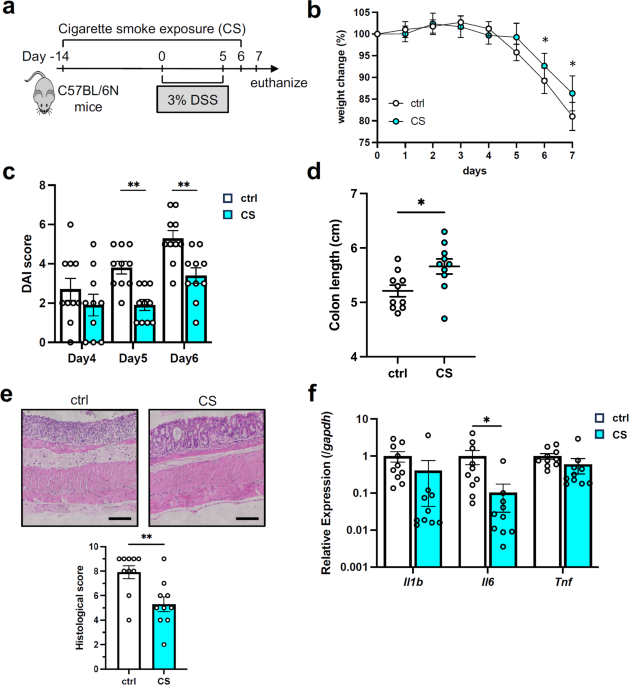
Metabolite 4-hydroxybenzoic acid, modulated by cigarette smoke exposure, functions as a protective factor in dextran sodium sulfate-induced colitis
Journal of Gastroenterology

Metabolite 4-hydroxybenzoic acid, modulated by cigarette smoke exposure, functions as a protective factor in dextran sodium sulfate-induced colitis

This preclinical study suggests cigarette smoke alters gut microbes and metabolites in ways that can either protect or worsen colitis depending on the model; it identifies 4-HBA as a metabolite that reduced inflammation...

Read Summary
End User Needs and Perspectives for a Digital Opioid Safety Tool in Adolescents and Young Adults With Inflammatory Bowel Disease: A Qualitative Human-Centered Design Study.
JMIR formative research

End User Needs and Perspectives for a Digital Opioid Safety Tool in Adolescents and Young Adults With Inflammatory Bowel Disease: A Qualitative Human-Centered Design Study.

Adolescents and young adults with IBD commonly face pain and may receive opioids; a digital tool designed with patient and clinician input could help reduce opioid-related risks and improve coordination of pain care.

Read Summary
Study of the Role of Pomegranate Juice Ellagitannins in the Modulation of Inflammation in Inflammatory Bowel Disease
ClinicalTrials.gov

Study of the Role of Pomegranate Juice Ellagitannins in the Modulation of Inflammation in Inflammatory Bowel Disease

This trial tests whether pomegranate juice can lower fecal calprotectin, a commonly used marker of intestinal inflammation, in people with IBD in remission. If effective, such a dietary approach could be of interest to...

Read Summary