All topics

Diet and lifestyle

Nutrition, food, supplements, exercise, sleep, stress, and lifestyle research for Crohn's disease and IBD.

Page 19 of 24 · 1124 articles

Appendicectomy in ulcerative colitis: a narrative review of epidemiology, pathophysiology, and emerging therapeutic implications
Inflammatory Bowel Diseases

Appendicectomy in ulcerative colitis: a narrative review of epidemiology, pathophysiology, and emerging therapeutic implications

The review examines whether removing the appendix could change the course of ulcerative colitis — a potential surgical option that might lower colectomy or hospitalization risk in some scenarios but also carries...

Read Summary
Phytotherapeutic potential of Gossypium barbadense L. root as an alternative therapy for colitis: a comprehensive review with network pharmacology insights.
Inflammopharmacology

Phytotherapeutic potential of Gossypium barbadense L. root as an alternative therapy for colitis: a comprehensive review with network pharmacology insights.

The article points to plant-derived compounds with anti-inflammatory and antioxidant actions that may be relevant to colitis mechanisms, which could be of interest to patients and clinicians following experimental or...

Read Summary
Artemisia rupestris Improves the Microbiota–Barrier Axis in DSS Colitis
International Journal of Molecular Sciences

Artemisia rupestris Improves the Microbiota–Barrier Axis in DSS Colitis

The study suggests Artemisia rupestris extract can reduce inflammation, repair the intestinal barrier, and shift the gut microbiota and metabolites in a mouse colitis model — pathways that are important in IBD. These...

Read Summary
Exclusive enteral nutrition containing transforming growth factor‐β improves intestinal barrier function in a colitis mouse model
Journal of Pediatric Gastroenterology and Nutrition

Exclusive enteral nutrition containing transforming growth factor‐β improves intestinal barrier function in a colitis mouse model

The study investigates how components of exclusive enteral nutrition (EEN), particularly transforming growth factor‑β (TGF‑β), may help restore intestinal barrier function after colitis. That could help explain why EEN...

Read Summary
Treatable traits in inflammatory bowel disease: a conceptual framework for personalized care.
EClinicalMedicine

Treatable traits in inflammatory bowel disease: a conceptual framework for personalized care.

A treatable-traits approach could help tailor IBD care to each patient by targeting specific biological, comorbid, and psychosocial drivers of disease and quality-of-life impairment, potentially improving how we choose...

Read Summary
Artificial Intelligence in the Nutritional Management of Inflammatory Bowel Disease: A Scoping Review.
Journal of multidisciplinary healthcare

Artificial Intelligence in the Nutritional Management of Inflammatory Bowel Disease: A Scoping Review.

AI could help identify dietary patterns, predict which patients might benefit from specific nutrition approaches, and provide personalized nutrition support — potentially improving inflammation and gut microbiome...

Read Summary
Oxidative Stress in Inflammatory Bowel Disease: From Redox Dysregulation to Translational Targeting
Antioxidants

Oxidative Stress in Inflammatory Bowel Disease: From Redox Dysregulation to Translational Targeting

Oxidative stress may help explain some biological drivers of inflammation in Crohn’s disease and ulcerative colitis and could become a target for biomarkers or therapies in the future. Right now, the evidence is...

Read Summary
Changyanqing decoction ameliorates ulcerative colitis via PI3K-Akt pathway: Insights from network pharmacology and in-vitro validation.
Pakistan journal of pharmaceutical sciences

Changyanqing decoction ameliorates ulcerative colitis via PI3K-Akt pathway: Insights from network pharmacology and in-vitro validation.

Patients and clinicians often ask whether herbal formulas or plant compounds can help IBD. This preclinical study identifies quercetin and the PI3K–Akt pathway as potential mechanisms, which may guide future research...

Read Summary
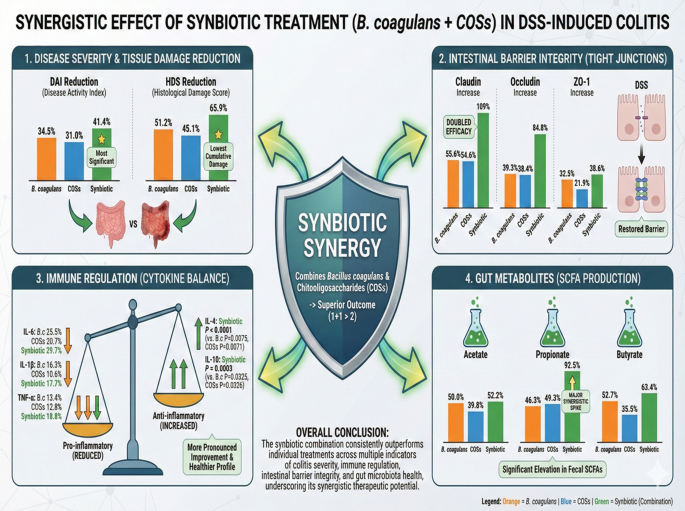
Synergistic synbiotic therapies for ulcerative colitis: mechanistic insights from multi-targeted pathways in animal models
Inflammopharmacology

Synergistic synbiotic therapies for ulcerative colitis: mechanistic insights from multi-targeted pathways in animal models

People with ulcerative colitis may be interested because synbiotic approaches aim to change the gut microbiome and intestinal barrier and therefore could become a future therapeutic option or adjunct. The paper...

Read Summary
Loss of TGR5-activating bile acids is associated with disease activity in inflammatory bowel disease
Scientific Reports

Loss of TGR5-activating bile acids is associated with disease activity in inflammatory bowel disease

The paper suggests that loss of microbial bile acid transformations in IBD reduces activation of the TGR5 receptor, and that lower TGR5 bioactivity correlates with higher inflammatory activity — a potential mechanism...

Read Summary
Callistephus A from Callistephus chinensis Alleviates DSS-Induced Ulcerative Colitis and Gut-liver Axis Disruption by Targeting the JAK2/STAT1 Pathway and Remodeling Gut Microbiota.
Journal of ethnopharmacology

Callistephus A from Callistephus chinensis Alleviates DSS-Induced Ulcerative Colitis and Gut-liver Axis Disruption by Targeting the JAK2/STAT1 Pathway and Remodeling Gut Microbiota.

The study identifies a plant-derived compound that reduced inflammation and liver injury in a mouse model of ulcerative colitis and ties its effects to both JAK2/STAT1 inhibition and changes in the gut microbiota—two...

Read Summary
The Diagnostic Accuracy of Fecal Calprotectin for Colonoscopic Abnormalities in Patients With Chronic Diarrhea.
Journal of gastroenterology and hepatology

The Diagnostic Accuracy of Fecal Calprotectin for Colonoscopic Abnormalities in Patients With Chronic Diarrhea.

Fecal calprotectin measured by a point‑of‑care CGICA assay showed high accuracy for identifying colorectal inflammation and IBD in patients with chronic diarrhea, which could help avoid some unnecessary colonoscopies...

Read Summary
Intestinal toxicity of functionalized polystyrene nanoplastics in NOD2 models of Crohn’s disease susceptibility
Frontiers in Toxicology

Intestinal toxicity of functionalized polystyrene nanoplastics in NOD2 models of Crohn’s disease susceptibility

The study suggests nanoplastic particles can alter intestinal barrier function, goblet cells, mucin secretion, and inflammation-related gene expression in models with genetic susceptibility to Crohn’s disease.

Read Summary
Crohn᾿s Disease and Ulcerative Colitis: The Role of Endoscopic, Hemogram-derived, Nutritional, and Hepatic Scores
Journal of Gastrointestinal and Liver Diseases

Crohn᾿s Disease and Ulcerative Colitis: The Role of Endoscopic, Hemogram-derived, Nutritional, and Hepatic Scores

Non-invasive biomarkers that reflect mucosal inflammation and systemic disease activity could help reduce reliance on frequent endoscopy and guide monitoring for people with Crohn’s disease or ulcerative colitis.

Read Summary
Targeted β‐Glucan‐Veiled Oral Apremilast Nanotherapy Modulates Key Dysbiosis‐Associated Gut Microbiota and Alleviates Ulcerative Colitis‐Associated Anxiety, Depression, and Neuropsychiatric Behaviors
Advanced Science

Targeted β‐Glucan‐Veiled Oral Apremilast Nanotherapy Modulates Key Dysbiosis‐Associated Gut Microbiota and Alleviates Ulcerative Colitis‐Associated Anxiety, Depression, and Neuropsychiatric Behaviors

The study describes a new oral nanotherapy that delivered apremilast to the inflamed colon in mice and reportedly reduced gut inflammation and behaviors resembling anxiety/depression—suggesting a combined...

Read Summary
Colon-targeting pH-responsive Bletilla striata polysaccharide coacervate microdroplets for ulcerative colitis therapy via macrophage reprogramming
Journal of Nanobiotechnology

Colon-targeting pH-responsive Bletilla striata polysaccharide coacervate microdroplets for ulcerative colitis therapy via macrophage reprogramming

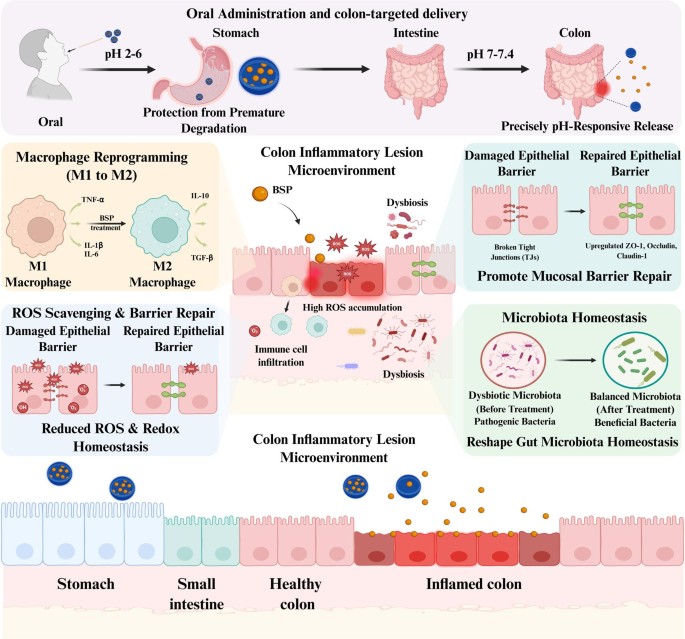
The study describes a new oral, colon‑targeted delivery system that improved outcomes in a mouse model of ulcerative colitis and shifted immune and microbiome markers—research that could inform future therapies focused...

Read Summary
Lactobacillus pentosus Unraveling the probiotic evidence: howfrom fermented vegetables alleviates colitis by enlisting muribaculum to boost host phosphatidylcholine biosynthesis.
Food & function

Lactobacillus pentosus Unraveling the probiotic evidence: howfrom fermented vegetables alleviates colitis by enlisting muribaculum to boost host phosphatidylcholine biosynthesis.

This study suggests a specific probiotic strain may help reduce colitis in mice by changing the gut microbiome and boosting host phosphatidylcholine production — a pathway that could be relevant to gut barrier repair in...

Read Summary
Sanggenol L Regulates Nrf2/HO-1/p65 Signalling Pathways via Dextran Sulfate Sodium-Induced Ulcerative Colitis in Mice
Bratislava Medical Journal

Sanggenol L Regulates Nrf2/HO-1/p65 Signalling Pathways via Dextran Sulfate Sodium-Induced Ulcerative Colitis in Mice

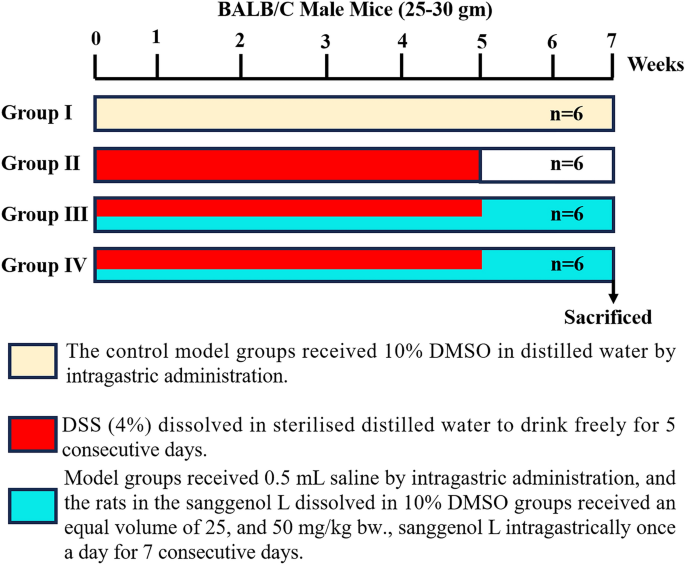
Researchers exploring new anti-inflammatory or antioxidant compounds for ulcerative colitis may find sanggenol L’s effects on Nrf2/HO-1 and TLR4/p65 signalling of interest. Patients should note this is early-stage,...

Read Summary
Current and emerging therapeutic strategies targeting adherent-invasive Escherichia coli in Crohn’s disease: a review
Gut Pathogens

Current and emerging therapeutic strategies targeting adherent-invasive Escherichia coli in Crohn’s disease: a review

Adherent-invasive E. coli (AIEC) is implicated in Crohn’s disease inflammation in some patients. This review maps possible ways to target AIEC specifically, which could lead to therapies that reduce infection-driven...

Read Summary
Lactobacillus johnsonii mediates the protective effects of pristimerin against ulcerative colitis and concomitant liver injury through remodeling hepatic lipid metabolism via LXRα-SCD1 axis.
Gut microbes

Lactobacillus johnsonii mediates the protective effects of pristimerin against ulcerative colitis and concomitant liver injury through remodeling hepatic lipid metabolism via LXRα-SCD1 axis.

The study identifies a gut bacteria–liver signaling axis (Lactobacillus johnsonii → hepatic LXRα–SCD1) that may explain how altered hepatic lipids contribute to UC and related liver injury, and shows pristimerin can...

Read Summary
Standard malnutrition screening tools inadequately capture comprehensive nutritional needs in outpatients with inflammatory bowel disease.
Crohn's & colitis 360

Standard malnutrition screening tools inadequately capture comprehensive nutritional needs in outpatients with inflammatory bowel disease.

Standard measures like BMI and routine labs can miss muscle and fat depletion in IBD patients. Better screening plus access to dietitian assessment could find treatable malnutrition that affects recovery and quality of...

Read Summary
Magnoflorine, a dietary alkaloid from Alpinia oxyphylla fruit, ameliorates colitis by restoring intestinal barrier and dual modulation of JAK/STAT3 pathway.
Food chemistry

Magnoflorine, a dietary alkaloid from Alpinia oxyphylla fruit, ameliorates colitis by restoring intestinal barrier and dual modulation of JAK/STAT3 pathway.

The study identifies a food-derived compound that improved colitis in lab models and acted on JAK/STAT3 signaling and intestinal barrier proteins—pathways relevant to IBD inflammation and mucosal healing.

Read Summary
Immunomodulatory biomaterials as a novel therapeutic platform for inflammatory bowel disease.
Therapeutic advances in gastroenterology

Immunomodulatory biomaterials as a novel therapeutic platform for inflammatory bowel disease.

Biomaterials that directly modify immune responses could offer new localized, targeted ways to treat gut inflammation, potentially reducing reliance on systemic immunosuppressive drugs. This review summarizes preclinical...

Read Summary
Hierarchical correlates of sexual dysfunction in inflammatory bowel disease: Psychological burden outweighs disease activity and sarcopenia.
Journal of psychosomatic research

Hierarchical correlates of sexual dysfunction in inflammatory bowel disease: Psychological burden outweighs disease activity and sarcopenia.

Sexual dysfunction is common in IBD and—according to this study—appears more strongly linked to psychological and demographic factors than to disease activity or muscle loss. Recognizing and treating mental-health issues...

Read Summary
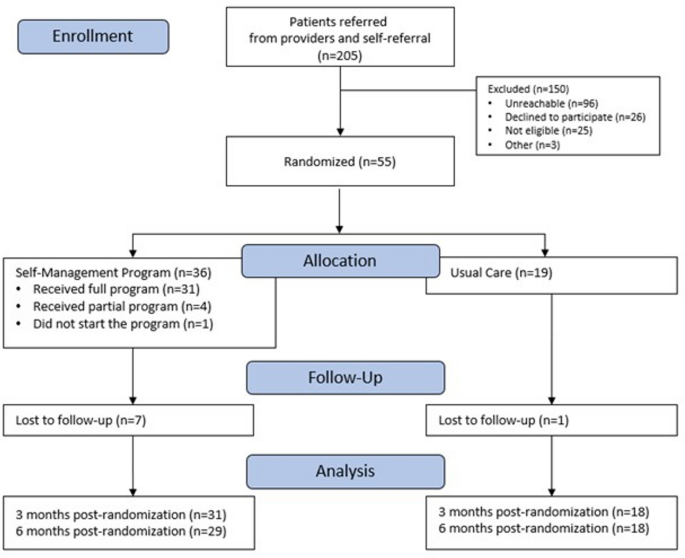
Feasibility, Acceptability, and Preliminary Effects of a Nurse-Delivered Self-Management Program for Individuals with Inflammatory Bowel Disease: A Pilot Randomized Controlled Trial
Digestive Diseases and Sciences

Feasibility, Acceptability, and Preliminary Effects of a Nurse-Delivered Self-Management Program for Individuals with Inflammatory Bowel Disease: A Pilot Randomized Controlled Trial

Self‑management programs delivered by nurses may help people with IBD improve daily functioning, confidence in managing their condition, and quality of life even when inflammation markers don’t change. That matters...

Read Summary
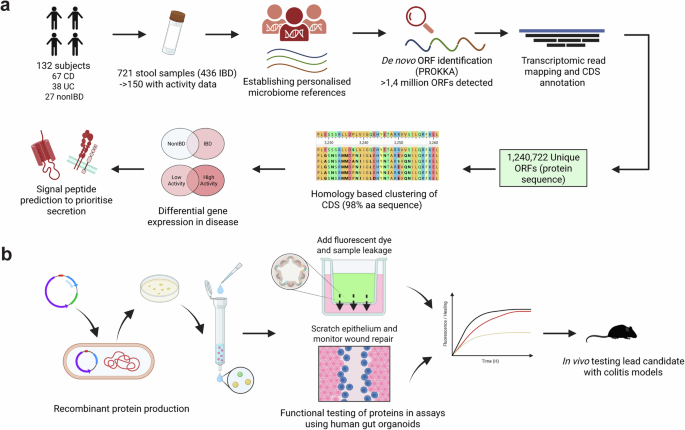
A microbiome meta-transcriptomics pipeline identifies a neutrophil elastase inhibitor that protects the colonic epithelial barrier
Signal Transduction and Targeted Therapy

A microbiome meta-transcriptomics pipeline identifies a neutrophil elastase inhibitor that protects the colonic epithelial barrier

Identifies a microbiome-derived protein that inhibits a protease linked to epithelial damage in IBD and shows protective effects in lab and mouse models, pointing to a new therapeutic strategy focused on barrier...

Read Summary
Probiotic‐Derived Vesicles Rectally Delivered via Thermo‐Gelling Copolymer Promote Mucosal Healing and Reduce Inflammation in Ulcerative Colitis
Advanced Science

Probiotic‐Derived Vesicles Rectally Delivered via Thermo‐Gelling Copolymer Promote Mucosal Healing and Reduce Inflammation in Ulcerative Colitis

This study describes a local rectal therapy that combines mesalamine with probiotic‑derived extracellular vesicles to promote mucosal healing and reduce inflammation in ulcerative colitis models, which could point toward...

Read Summary
Osbeckia opipara attenuates inflammation and reconstructs the intestinal barrier in ulcerative colitis by modulating the AHR/IL-22/STAT3 signaling axis.
Phytomedicine : international journal of phytotherapy and phytopharmacology

Osbeckia opipara attenuates inflammation and reconstructs the intestinal barrier in ulcerative colitis by modulating the AHR/IL-22/STAT3 signaling axis.

The study suggests a plant-derived AHR-activating mechanism that reduced inflammation and repaired the intestinal barrier in preclinical ulcerative colitis models, a pathway that could be relevant to future therapies or...

Read Summary
Impact of Zinc‐Dependent Enzymes on Zinc Deficiency and Inflammatory Response in Ulcerative Colitis
Journal of Gastroenterology and Hepatology

Impact of Zinc‐Dependent Enzymes on Zinc Deficiency and Inflammatory Response in Ulcerative Colitis

Zinc deficiency is common in UC, and this study suggests that changes in zinc‑dependent enzyme activity in the gut lining are linked with local inflammation. If confirmed, mucosal enzyme activity might help explain...

Read Summary
Urinary Organic Acid Profiling by GC-MS Reveals Distinct Metabolic Signatures for Non-Invasive Diagnosis and Disease Activity Monitoring of Inflammatory Bowel Disease
International Journal of Molecular Sciences

Urinary Organic Acid Profiling by GC-MS Reveals Distinct Metabolic Signatures for Non-Invasive Diagnosis and Disease Activity Monitoring of Inflammatory Bowel Disease

Non-invasive urine biomarkers could make diagnosis and disease-activity monitoring easier and less invasive for people with IBD. Identifying metabolites linked to UC activity may help tailor monitoring without frequent...

Read Summary
Role of Fatty Acid Oxidation in Crohn's Disease and Ulcerative Colitis: Metabolomics Analysis and Experimental Evidence
PubMed Central

Role of Fatty Acid Oxidation in Crohn's Disease and Ulcerative Colitis: Metabolomics Analysis and Experimental Evidence

The study links depleted fatty acid oxidation metabolites—especially butyrate—to impaired regulatory T cell development in IBD, suggesting a metabolic pathway that may influence immune tolerance and disease activity.

Read Summary
Mesenchymal Stem Cells and Their Exosomes as Novel Modulators of Gut Microbiota: Therapeutic Perspectives for Liver Diseases and Inflammatory Bowel Disease.
Microbial pathogenesis

Mesenchymal Stem Cells and Their Exosomes as Novel Modulators of Gut Microbiota: Therapeutic Perspectives for Liver Diseases and Inflammatory Bowel Disease.

The review suggests MSCs and their exosomes can change the gut microbiome, a factor implicated in IBD and liver disease, pointing to a potential new therapeutic approach. Patients and clinicians interested in future IBD...

Read Summary
Inflammatory marker profiles vary by BMI across Crohn’s disease, ulcerative colitis, psoriasis, and psoriatic arthritis
Frontiers in Endocrinology

Inflammatory marker profiles vary by BMI across Crohn’s disease, ulcerative colitis, psoriasis, and psoriatic arthritis

Markers of systemic inflammation (CRP and ESR) were consistently higher in people with obesity across Crohn’s disease, ulcerative colitis, psoriasis, and psoriatic arthritis, suggesting body weight may influence...

Read Summary