All topics

Diet and lifestyle

Nutrition, food, supplements, exercise, sleep, stress, and lifestyle research for Crohn's disease and IBD.

Page 21 of 24 · 1124 articles

Serum Leptin, Ghrelin, and IGF-1 Levels and Their Association with Bone Mineral Density in Patients with Ulcerative Colitis

People with UC have higher rates of low bone density, which raises fracture risk. This study links altered hormones (leptin, ghrelin, IGF‑1) and inflammation to lower BMD in UC, suggesting metabolic pathways that could...

Read Summary
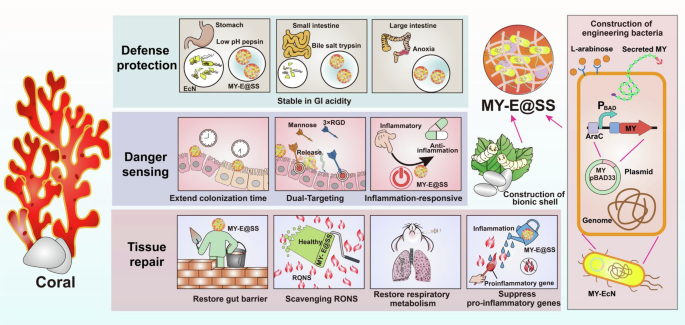
Hollow Cu 2 O Nanozymes Enhance Probiotic Therapy for Colitis via Redox Homeostasis and TXNIP/NLRP3 Inflammasome Inhibition
Advanced Science

Hollow Cu 2 O Nanozymes Enhance Probiotic Therapy for Colitis via Redox Homeostasis and TXNIP/NLRP3 Inflammasome Inhibition

The study targets oxidative stress and the TXNIP/NLRP3 inflammasome axis, both implicated in IBD inflammation and barrier damage. If translatable, nanozyme-assisted probiotic therapy could offer a novel, targeted way to...

Read Summary
Machine Learning-Based Prediction of Treatment Response to Vitamin D3 in Adolescents and Young Adults with Inflammatory Bowel Disease: A Prospective, Open-Label, Alternation-Based Comparative Study
Biomedicines

Machine Learning-Based Prediction of Treatment Response to Vitamin D3 in Adolescents and Young Adults with Inflammatory Bowel Disease: A Prospective, Open-Label, Alternation-Based Comparative Study

Vitamin D supplementation is commonly considered in people with IBD because deficiency is frequent and low vitamin D may relate to inflammation.

Read Summary
Isolated Transverse Colon Perforation During Corticosteroid Tapering in Quiescent Systemic Lupus Erythematosus: A Histopathology-Supported Diagnosis of Exclusion
Cureus

Isolated Transverse Colon Perforation During Corticosteroid Tapering in Quiescent Systemic Lupus Erythematosus: A Histopathology-Supported Diagnosis of Exclusion

GI perforation is a serious, potentially life-threatening complication that can occur in people with autoimmune diseases; this report highlights that perforation can happen during corticosteroid tapering and that careful...

Read Summary
Gut microbiome in pediatric acute pancreatitis and Crohn's disease versus irritable bowel syndrome and healthy controls
Journal of Pediatric Gastroenterology and Nutrition

Gut microbiome in pediatric acute pancreatitis and Crohn's disease versus irritable bowel syndrome and healthy controls

The gut microbiome differed more in pediatric Crohn’s disease and acute pancreatitis than in IBS or healthy kids, suggesting microbial changes are stronger in organic inflammatory disease and could be targets for future...

Read Summary
Nutrition and Body Composition: Missing Outcomes in Appetite- and Weight-Modifying Therapies for Individuals with Inflammatory Bowel Disease.
Gastroenterology

Nutrition and Body Composition: Missing Outcomes in Appetite- and Weight-Modifying Therapies for Individuals with Inflammatory Bowel Disease.

Cure8 found this source from Gastroenterology, but the page could not be read reliably yet. It is tagged for Inflammatory bowel disease and Research and clinical trials. Open the original article for the full details.

Read Summary
Black tea-processed Toona sinensis leaves alleviate DSS-induced ulcerative colitis in mice by enriching flavonoids and modulating gut microbiota
Frontiers in Nutrition

Black tea-processed Toona sinensis leaves alleviate DSS-induced ulcerative colitis in mice by enriching flavonoids and modulating gut microbiota

The study identifies a food-processing method (black tea processing) that increased flavonoids and improved outcomes in a mouse model of colitis, suggesting that specific dietary preparations might influence gut...

Read Summary
Multi-omics Mendelian randomization and experimental validation identify PRKAB1 as a regulator of phosphatidylcholine metabolism in IBD.
Naunyn-Schmiedeberg's archives of pharmacology

Multi-omics Mendelian randomization and experimental validation identify PRKAB1 as a regulator of phosphatidylcholine metabolism in IBD.

Phosphatidylcholines are implicated in IBD biology; identifying a gene that regulates PC metabolism could point to new mechanistic targets. If PRKAB1 modulates epithelial lipid metabolism relevant to inflammation, it may...

Read Summary
A scoping review on emerging biomarkers in inflammatory bowel disease: Towards precision medicine in diagnosis and therapeutic management.

PloS one

A scoping review on emerging biomarkers in inflammatory bowel disease: Towards precision medicine in diagnosis and therapeutic management.

New, non-invasive biomarkers and AI-driven multi-omic approaches could make diagnosis and treatment of IBD more precise, helping patients avoid invasive tests and improving chances of choosing effective therapies sooner.

Read Summary
Marine Collagen Peptide Fraction from Lutjanus erythropterus Scales: A Multifunctional Bioactive for Intestinal Barrier Protection and Redox Modulation in Ulcerative Colitis
Foods

Marine Collagen Peptide Fraction from Lutjanus erythropterus Scales: A Multifunctional Bioactive for Intestinal Barrier Protection and Redox Modulation in Ulcerative Colitis

This preclinical study suggests a marine-derived collagen peptide fraction may strengthen intestinal barrier function, reduce oxidative stress, and partially restore gut microbiota in models of colitis — mechanisms...

Read Summary
INTERROGATING GCPII-MEDIATED GLUTAMATE SIGNALING IN THE GASTROINTESTINAL TRACT AND ITS ROLE IN INTESTINAL HOMEOSTASIS
NIH RePORTER

INTERROGATING GCPII-MEDIATED GLUTAMATE SIGNALING IN THE GASTROINTESTINAL TRACT AND ITS ROLE IN INTESTINAL HOMEOSTASIS

This project studies a novel enzyme target (GCPII) that is reportedly upregulated in IBD and may change glutamate signaling and barrier function; understanding it could point to new treatment strategies for people whose...

Read Summary
Modulating Microbial Choline Degradation to Prevent and Treat Intestinal Fibrosis in Inflammatory Bowel Diseases
NIH RePORTER

Modulating Microbial Choline Degradation to Prevent and Treat Intestinal Fibrosis in Inflammatory Bowel Diseases

Intestinal fibrosis and strictures remain a major cause of surgery and obstruction in Crohn’s disease, and current anti-inflammatory drugs don’t reliably prevent fibrosis. If microbial choline degradation promotes...

Read Summary
Protective effects of Brassica rapa L. water extract against DSS-induced acute UC-like colitis in mice and its regulatory mechanisms involving gut microbiota and the intestinal mucosal barrier
Frontiers in Microbiology

Protective effects of Brassica rapa L. water extract against DSS-induced acute UC-like colitis in mice and its regulatory mechanisms involving gut microbiota and the intestinal mucosal barrier

The study identifies a plant extract that reduced colitis-like injury in mice and altered gut microbes and intestinal barrier markers, which could inform future preclinical work. For people with IBD, this is early-stage...

Read Summary
Cimicifuga foetida L. polysaccharide alleviates ulcerative colitis by inhibiting pyroptosis and regulating gut microbiota
Frontiers in Pharmacology

Cimicifuga foetida L. polysaccharide alleviates ulcerative colitis by inhibiting pyroptosis and regulating gut microbiota

Researchers are exploring plant-derived polysaccharides as potential therapies that might reduce inflammation and protect the intestinal barrier. For people with UC, therapies that reduce pyroptosis and restore...

Read Summary
Crohn's Disease: From Immune Dysregulation to Intestinal Damage.
Inflammation

Crohn's Disease: From Immune Dysregulation to Intestinal Damage.

This review explains how genetic, microbial, immune, and stromal factors interact to cause Crohn’s disease, which helps explain why treatments often need to target specific immune pathways or biologic mechanisms....

Read Summary

Meta-Analysis: Crohn's Disease Exclusion Diet for Induction and Maintenance in Crohn's Disease.

Dietary strategies such as the Crohn’s Disease Exclusion Diet (CDED) may help induce remission for some people with Crohn’s disease and could be an option alongside medical therapy or enteral nutrition. Patients...

Read Summary
Ginseng marc-derived low-molecular-weight neutral glucan SN-GOS ameliorates ulcerative colitis via inhibition of apoptosis and activation of autophagy in human intestinal HT-29 cells and DSS-induced inflammatory colitis mice.
Carbohydrate research

Ginseng marc-derived low-molecular-weight neutral glucan SN-GOS ameliorates ulcerative colitis via inhibition of apoptosis and activation of autophagy in human intestinal HT-29 cells and DSS-induced inflammatory colitis mice.

This preclinical study suggests a ginseng-derived polysaccharide reduced inflammation and tissue injury in cell and mouse models of colitis, which could eventually inform dietary supplements or therapeutic research...

Read Summary

Microbiome-driven alterations in tryptophan metabolism contribute to behavioral comorbidities in the Muc2 knockout mouse model of chronic colitis.

IBD is increasingly linked with anxiety, depression, and cognitive symptoms; this study suggests gut microbes may change tryptophan metabolism in colitis and contribute to those brain-related symptoms, which could point...

Read Summary
Partial Enteral Nutrition as Therapeutic Augmentation of Advanced Pharmacological Therapy in Patients With Active Crohn's Disease
ClinicalTrials.gov

Partial Enteral Nutrition as Therapeutic Augmentation of Advanced Pharmacological Therapy in Patients With Active Crohn's Disease

Adding structured partial enteral nutrition to advanced drug therapy could offer a non-pharmacologic way to improve short-term, steroid-free remission rates in active Crohn's disease if the trial shows benefit.

Read Summary
Glycocholic acid inhibits TRIB3-ID1 axis to acelerate colitis progression via suppressing intestinal stem cell renewal.
Nature communications

Glycocholic acid inhibits TRIB3-ID1 axis to acelerate colitis progression via suppressing intestinal stem cell renewal.

The paper proposes a specific molecular link between elevated glycocholic acid (a bile acid altered in IBD) and impaired intestinal stem cell renewal via the TRIB3–ID1 pathway, which could help explain poor mucosal...

Read Summary